
Wrinkled Wisdom:  A Lesson in Slang

Walt Whitman described slang as “…imagination and humor, breathing into its nostrils the breath of life.”  Guardians of standard English roll their eyes and bemoan slang’s degrading impact.  They are ignored.  Slang has long permeated everyday speech.  Heck, there is even an Oxford Dictionary of Modern Slang that includes over 6,000 slang words and expressions from the 20th and 21st centuries.

Each generation creates its own unique slang.  This informal language conveys meaning quickly and expressively.   It establishes a sense of community among its speakers and listeners.   As someone once said, “Slang is like a secret handshake.  If you understand it, you’re in the club.” 

Remember saying we “dig it” to describe something we really liked.  You never wanted to be a square, our term for someone uncool.  That would be a bummer!  A fink was a snitch and we called the television the boob tube. 

In our youthful 1960s and 1970s, hippie slang was in.  Groovy.  Far out.  Cool.  Flower power.   “Cool” has had staying power.   Cool!

Cannabis was a symbol of hippie rebellion.  Yikes, remember Woodstock?  Our slang for marijuana was dope—one syllable not four.  We were recently politely critiqued by a young man for using the word dope.  Showing our age, apparently.   The kids refer to it as weed.  Who cares.  If we oldies are using cannabis products, it’s probably for medical reasons!  Oh, and the word dope in slang now means cool or awesome. 

Giggled reading AARP’s article titled: A Guide to Understanding Today’s Slang: We deciphered some key phrases to help you understand your grandkids.

We’ve got a few down.  OMG often conveys our feelings very effectively.  We type LOL in response to a fun text from a friend.  We really are often laughing out loud.  But, LOL, we are not going to buy that tee shirt sporting the catchy phrase: “I’m a TMI Enjoyer…You Can Never Tell Me Too Much.”  Though, admit it.  Some TMI can be very entertaining!   Didn’t know that in the 1960s a San Francisco Chronicle columnist popularized LOL as an acronym for “little old lady.”  Don’t tell the grandkids!

But, that’s about it.   Other acronyms?  IYKYK stands for “if you know, you know.”  FOMO?  Fear of missing out.  GOAT?  Greatest of all time.  Then there is fit— short for outfit.  Lit?  Something that is amazing or exciting.  Gucci reportedly means cool or going well.  That one surprised us.  Do kids even know it’s a luxury brand that’s hard on the pocketbook?  Wait.  Maybe the slang originated with the rapper Gucci Mane??  Yes.  We know.  Never heard of him either.

Knowing today’s slang doesn’t just facilitate communicating with the grandkids.  Better pay attention if you want to finish a crossword puzzle these days!  Puzzles are skewing younger.  Phat?  It will be clued as something that is very attractive or appealing.  Bae is your main squeeze in modern lingo and the answer in many recent puzzles.  We got ticked when a recent puzzle clued an answer as meaning agreement or relatable in slang.  Mood??  Huh??  We were in no mood for that.   

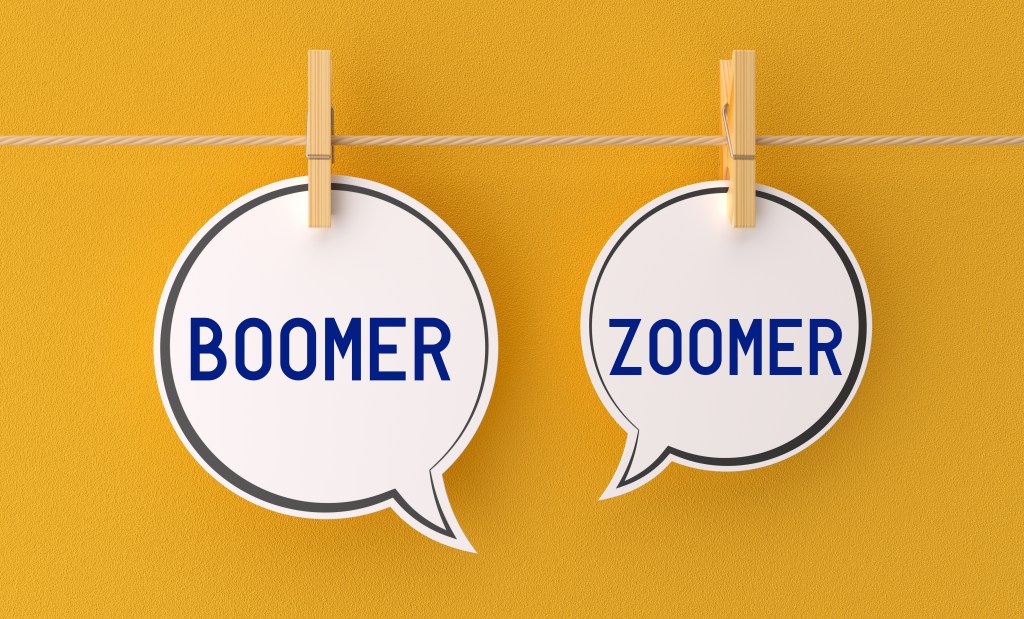
Surprised to learn that the word “mother” today doesn’t always mean…well, mother.  Gen Z, 13-28-year-olds, use it as slang to describe someone they admire or respect.  A positive!  Maybe its source is the drag culture, where “mother” has long been used to affectionately refer to the people who inspired them and/or their personas.  Remember RuPaul, an American drag queen, television host, singer, and actor, wrote the hit dance song “Call Me Mother”??

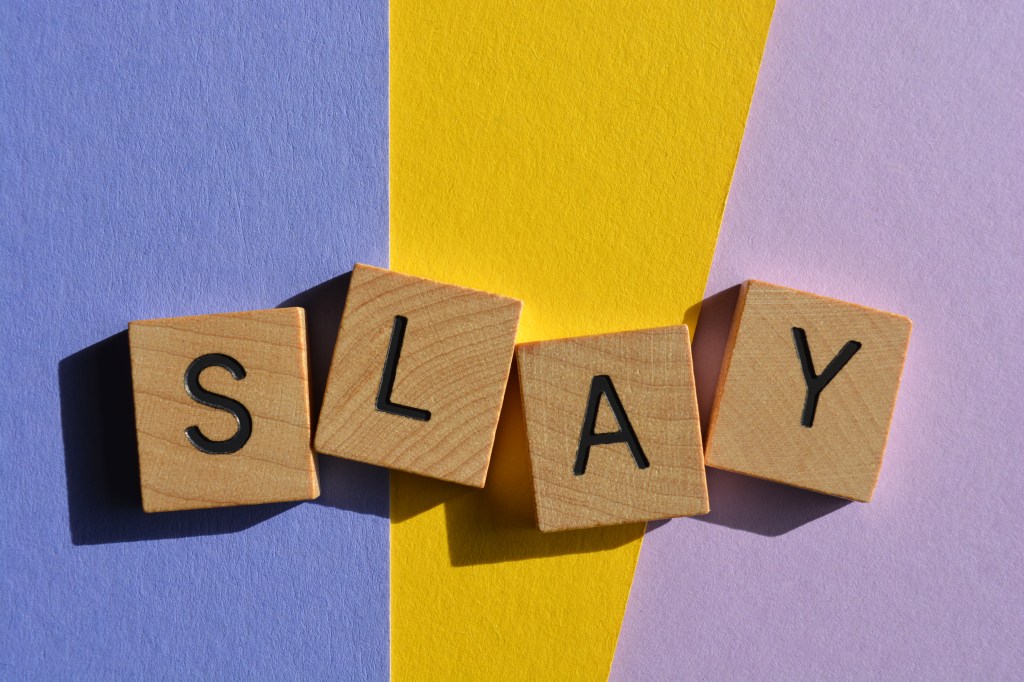
So, our Wrinkled Wisdom for today?  Quiz the grandkids about any slang you should be up on.  Doubt you’ll want to add any of it to your vocabulary, but knowledge is power!  When the grandkids use slang around you, just laugh and say “you really slay me!”  It’s common slang today as it was in the 70s and 80s.  So, you should feel comfortable spouting the phrase.  We’re still with it!

Wrinkled Wisdom – Profanity: Do We Give a Damn?

We all remember watching a rerun of Gone with the Wind in which Rhett Butler’s last words to Scarlett O’Hara are: “Frankly, my dear, I don’t give a damn.”  Historians say the filmmakers had to fight very hard to keep that line in the 1939 movie.  Wow!  Damn.  How daring! 

Fifty years ago, the comedian George Carlin was arrested for disorderly conduct after he performed his classic bit, “Seven Words You Can’t Say on Television,” at a festival.  Charges were dropped and his popularity popped! 

Heck, swearing has been around for centuries.  Just check out the bible’s Colossians 3:8: “Cast off and throw away all these rotten garments of anger, hatred, cursing, and dirty language.” 

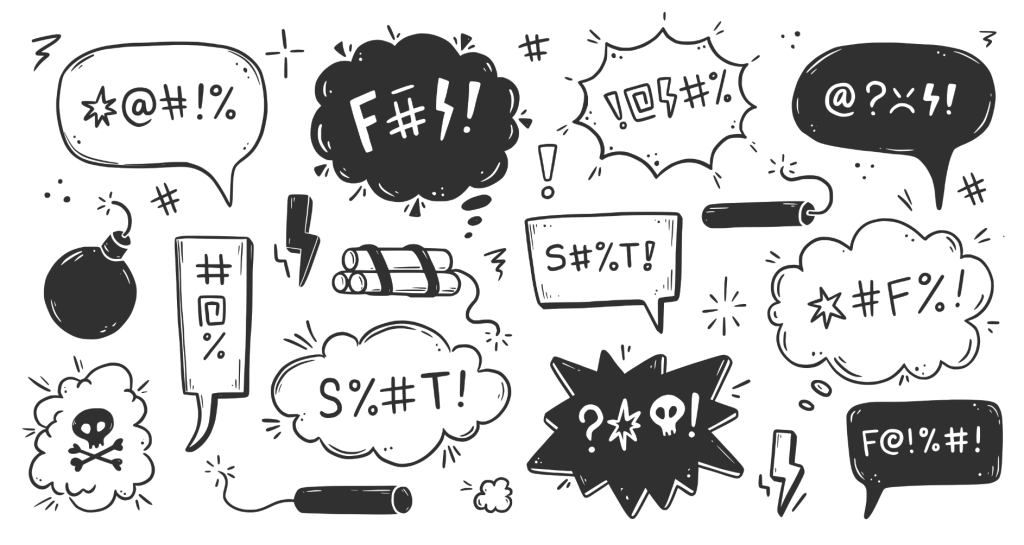
Today, cursing is just coursing through our society.  Words once too blue to be uttered publicly have become increasingly commonplace.  Okay, not some of Carlin’s seven words.  Researchers say it’s part of a shift to a more casual lifestyle and the way people communicate on social media.  About one in every 10 words on Twitter, now known as X, is a swear word. 

And, there’s a significant increase in explicit and unfiltered language in movies, streaming services, and TV shows.  Some dirty words do get bleeped on TV.

No more euphemisms or coy acrobatics like freaking, frigging, and fricking!  Really?  “Damn” and “hell” are now in newspaper comic strips. 

News organizations started relaxing their style guides on profanity about 10 years ago.  We’re entertained by changes to one style manual on cursing.  It spells out the proper style for f—up as a noun and a verb and f—ed-up as an adjective.  It has spellings for s— list, s—storm, s—show, and s—hole.  In case you are curious, s— talk has a space when used as a noun, but a hyphen when used as a verb.  Last month, Vanity Fair published a headline including the phrase: “Such a F—king Nerdy Film Geek,” quoting how the director of the movie Parasite describes himself.   That’s another adjectival form as grammar freaks well know.

And, contemporary music?  Hip-hop and rap feature more explicit language than country or pop.   We wouldn’t know.  We play our old CDs.  Love that numbers of studies show that today’s music is inferior to the tunes we sang along with and danced to.  

Not surprisingly, kids are swearing more today and at very early ages.  Profanity is pretty ubiquitous on Netflix’s Teen programming.  There’s a clear disconnect between what Netflix and parents consider appropriate.  Remember when your mom threatened to wash your mouth out with soap if you used that dirty word again?


Cursing has led to a remarkably large body of academic research.  It’s a useful indicator of emotion states.  It can improve strength when exercising.  It increases the number of pushups we can do!   Swearing when we’re angry or frustrated makes us feel better.  Hell, yes!  And, a fun fact.  Chimpanzees, raised by humans and trained in sign language, have taught themselves to swear, using the sign for “dirty” when they are aggravated. 

The 2000 book “Cuss Control: The Complete Book on How to Curb Your Cursing” theorizes that the widespread use of foul language has contributed to the decline of civility and good manners.  Hmmm.  It’s out of print.  Guess no one gives a damn.

So, our Wrinkled Wisdom for today:  Learn a bit of sign language so you can swear like a chimpanzee in front of the grandkids.  If kids are in the room, we do give a damn about profanity!  With adults, show off your intellect!  People with higher intellects are more likely to swear.  But, oops, they are also more likely to eat spicy breakfasts and walk around the house naked.  Dagnamit!  Drat!  Gadzooks!  Cripes!  You can always charm those around you with these old-timey oaths…if you don’t mind showing your age.

Texting: a Foreign Language

shutterstock_105949139

audioheader

The hours kids spend on their phones are paying off. They have become fluent in a foreign language—texting. We get it. Texting is a way to communicate quickly with friends and family. Our fluency isn’t great. “C u l8r”—see you later—caught us off guard. LOL (Remember, grammar queens, no need for a period after text acronyms. Exclamation points, however, are just fine. OMG!)

A new study confirms what we suspected. The more kids send and receive texts, the worse their grammar skills become. IMHO

Sure, linguists will tell you language is very dynamic. We coin words, change definitions, expand usage, and watch popularity wax and wane. But, 70 percent of all text language is just plain incorrect English.

This is worrisome because text acronyms have become words for kids. Parents report that their kids are using these acronyms in their school assignments more than 60 percent of the time. And, then there is autocorrect, which can lead to an incomprehensible sentence and is creating a generation who can’t even spell common words.

We text. We are oldies yet we have embraced change! We break grammar rules all the time, knowing we are ignoring them for artistic and creative purposes. We start sentences with conjunctions…a no-no. Conjunctions include the words and, but, because, while, until, although, or if that are supposed to link sentences, clauses, phrases, or other words.

Okay, okay, okay. We swore we wouldn’t get into this fray. But, (see…we did it again…started a sentence with a conjunction) there are certain errors that are like fingernails on a chalkboard to us. Hmmm, we need to find another analogy since chalkboards, like rotary phones, won’t resonate with anyone but us oldies.

Please humor us! And, please correct the younger crowd when they screw up.

Misuse of the words fewer and less is really common and drives us nuts. Fewer is quantitative. It refers to things you can count, like mistakes in grammar or car windows. Use less as a modifier when it refers to something you can’t count, like rain or snow. We are constantly yelling at the television when ads and talk hosts misuse these words, shouting fewer when they have used less. And, these are the “guys” making the big bucks?

Irregardless is not a word! If you type it, your spell check tool will underline it in red. That should be a hint. It’s simply regardless.

Incorrect possessives have caused us to deface public and private property. The possessive is a word used to show who or what something belongs to. Ooops! Just ended a sentence with a preposition. Forgive us! Here’s the rule: always add an apostrophe “s” unless it’s a plural that ends in “s.” In that case, just add the apostrophe and nix the added “s.” That’s the Joneses’ house.

Think about the ladies’ room or the women’s dressing room, not the ladies’s room or the womens’ room. We took out our magic marker when we noted a restaurant had labeled the girls’ room the girl’s room. Oh, so this precludes more than one “girl” entering a bathroom with four stalls? FTFY! For those not in the know, that’s text for fixed that for you.

Lastly, spelling should count, too. Remember exiting is just the letter “c” away from exciting.

Our wrinkled wisdom for today? Good grammar and spelling still count, not just orally—as in spoken aloud, but in thank you notes, resumes, and especially business proposals and emails. We’d love to include tweets, but we would be wasting our breath. If you are emailing your boss, reread so autocorrect doesn’t foul something up. And perhaps most intriguing, we recently read that bad grammar can knock you off someone’s dating site picks!! Hotness points are given for knowing how to correctly use the homonyms their, they’re, and there. Bad grammar might keep you from meeting the one! Yes, sex could be a powerful motivator for all ages.