Wrinkled Wisdom – Time for the Dreaded Seasonal Clothing Changeover

March 20 is the first day of spring.  It’s that bothersome time again to switch, swap, and rearrange the clothes in our closets and drawers.  Accessibility!  We don’t want to be digging through our winter sweaters looking for something to wear on a sunny, warm, spring day.  And, it will help us get dressed faster in the morning!  

Forget gender, we’ll all face some tough questions.  What to toss?  What to keep?  What to alter?  What to buy?  Well, what do we really need to buy?!  Decisions!  Decisions!

We want to smile when we check out our closet.  We want to look at things we are excited to wear.  What about those clothes we rarely or never don?  Hey, guys, how many suits, dress shirts, and ties do you really need these days?  According to statistics, we only wear 30% of the stuff in our closet.  Time to purge?  You betcha!  

We can donate our gently used clothes and get a tax deduction…a two-fer.  But, yikes, only 20-30% of those donated clothes actually make it to thrift store racks.  Sadly, about 85% of donated clothing ends up in landfills or is incinerated.  Not much incentive to donate!

Other options?  Consignment shops.  Would someone actually buy that, we ask ourselves??  We could sell our unwanted clothes on eBay and other online consignment shops.  Hmmm.  That sounds time-consuming.  Lots of trips to the post office.  But take a bow for the environment.  There are also shops that sell vintage clothing.  Don’t ignore that!  Vintage clothing is defined as garments from the 1920s to the 1990s.  The 90s!  Heck, we’ve got stuff from the 80s we still wear.  Did take the shoulder pads out.

Speaking of shopping, do you find it fun, a chore, disappointing?  Do you shop only sales and discount stores?  Are you willing to pay retail for something you need or is just awesome and you can’t wait to wear it?  Darn right!

Are you often turned off by the poor quality and just plain unattractiveness of the clothes in stores today?  We sure are.  These items reflect a business model called fast fashion or ultra-fast fashion.  The model advocates rapid production of inexpensive, trendy clothing driven by changing cycles influenced by social media and the proliferation of fashion ads.  The model reportedly causes consumers to buy more and get some dopamine rewards.  Huh??  What about durability, comfort, and style?

Hmmm.  These shoppers should consider reading the book Less: Stop Buying So Much Rubbish: How Having Fewer, Better Things Can Make Us Happier.  Duh!

Do you shop on-line?  We like to feel the fabrics and try the clothes on.  For good reason!  Does it fit??  Totally entertained by the term “vanity sizing,” which describes designers tagging clothes with smaller sizes to make consumers feel better about themselves.  They believe the smaller the size that fits, the more likely a shopper is to buy it.  Shrinkflation! 

A British movement advocates we limit our clothing purchases to five items per year plus four secondhand items, to reduce fashion consumption and limit the huge number of discarded items that end in landfills.  Gee, we wish we could find five items each year we wanted to buy!  Oh, this Rule of Five exempts socks and underwear.  They also want people to rent formal clothes for special occasions.  And, it is possible to rent for pregnancy and vacations.  

So, our Wrinkled Wisdom for today?  Purge, swap, consign, and donate.  Know you’re not alone when you gag in the store at all those ugly clothes that will shrink, stretch, fray, shed, fade, pill, and tear.  If you see something you like, just buy it!  Smile at Sex and the City Carrie Bradshaw’s take: “I like my money right where I can see it: hanging in my closet.”

Wrinkled Wisdom – Open Sesame!

If only we could just repeat Ali Baba’s magical command, “open sesame,” when attempting to unscrew jars and bottles or unseal plastic packing and cans.

We are so delighted to learn we are not alone!  Surveys indicate that most of us say that everything has become harder to open and we are all angry and frustrated about it.  That anger even has names!  Wrap rage!  Package rage!

We were stunned by research on injuries from trying to open problematic packaging.  Over 70% of respondents to a survey said they had hurt themselves.  Cut fingers and bruised hands.  Sprained wrists.  Strained shoulder muscles.  One year, over 60,000 people received hospital treatment after struggling to open something. 

A late-night show host made a point one night using a knife to try to remove his new calculator from its plastic packing.  Nope, he couldn’t do it.  We clapped!  Join the club!

Glass jars are one of the most complained-about types of packaging.  They are vacuum-sealed so tightly you need superhuman strength to get them undone.  We bang it on the floor.  It breaks the seal and we feel better after expressing our package rage.  Take that!

At one time, the electric can opener was a novelty.  We were ecstatic to ditch that manual can opener that often skipped sections of the can lid.  Now many cans have that pop-up feature; yet, too often we can’t lift these ring-pull seals.  If we use our special pop-top opener tool, we sometimes can’t get a good grip on the can, spilling liquid everywhere.  Nope.  Not a happy camper.

Twist off caps.  Great invention!!  Don’t need a church key anymore.  But, good luck with that twist.  Thankfully, those round rubber grips or kitchen rubber gloves have saved us time and mental aggravation.  Verbal abuse has also been used. 

Those seals under the lid of products like coffee creamers, heartburn-soothing liquids, and some cans of peanuts cause all kinds of grief.  Who can grip that teeny tiny tab near the rim??   No, teeth don’t work.  Tried that.  We just jab it with a knife.  So, there!!!  And…if the seal is tinfoil, you have to get it completely off to recycle the bottle.  No punching holes for immediate gratification. 

We continue to be amused by directions saying “tear here.”  Forget about it!  Scissors are the answer…a true kitchen tool.  And those resealable products?  Sometimes we reseal them, and then can’t reopen them!  More package rage!

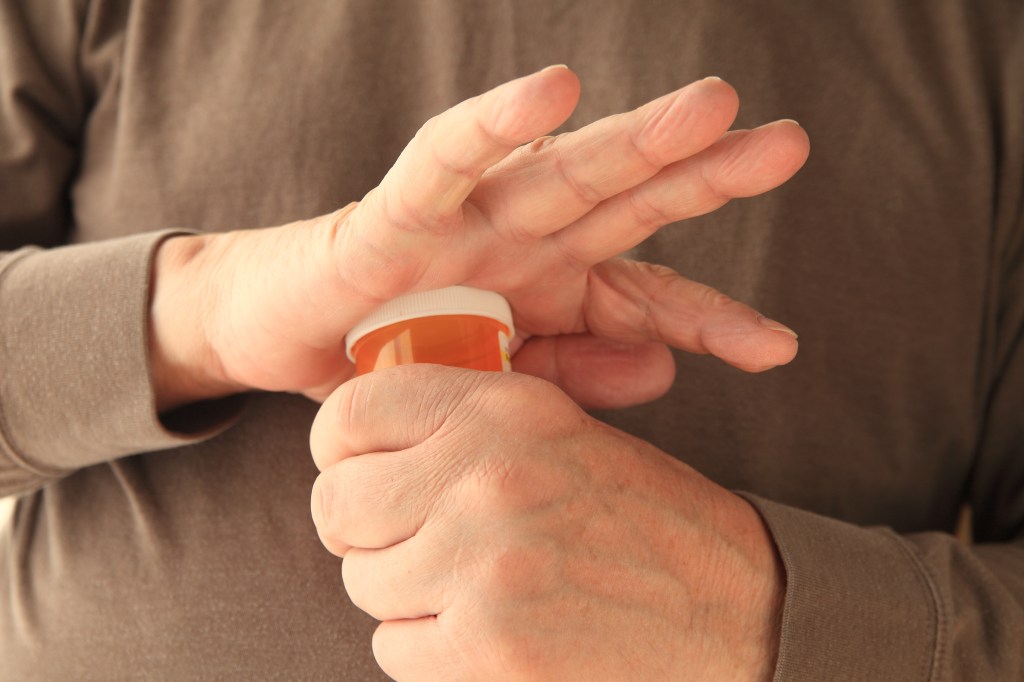
Medicine bottles.  Press down and turn.  Well, some of us just don’t have the strength. So, we just leave the bottles open and try not to knock them over.  Out of reach of animals and grandkids, of course! 

Manufacturers argue that packaging is designed to be child-resistant or intentionally made difficult to reduce pilferage and shoplifting.   Also, remember the Tylenol scare?   Seven people were poisoned after buying Tylenol at grocery and drug stores that an extortionist deliberately laced with cyanide.  The widespread fear resulted in government regulation requiring tamper-resistant packaging.  Some companies take the three-pronged approach.  That includes a seal under the bottle cap, a plastic cup over the cap, and the flaps of the box glued shut.  A little over the top, giggle?

Arthritis Australia is trying to give us a hand, literally.  The organization’s Accessible Design Division educates the industry about functional limitations caused by arthritis and aging.  Their Easy to Open certification program has collaborated with over 65 organizations, including food companies, to make it easier to open stuff.  Thank you!

And, if you want gadgets to keep you from fuming in the kitchen, take a look at the openers on the Essential Aids website.  They are both helpful and entertaining.  You’ll need to dedicate a kitchen drawer to all they offer but you’ll lower your blood pressure. 

So, our Wrinkled Wisdom for today?  Call, write, or email all companies whose products you struggle to open.  Exercise your consumer power!  Can’t open it, won’t buy it again. Have grandkids?  Ask them to post a video of you wrestling to open a jar or bottle.  Put away those razor blades, box cutters, and ice picks.  Investing in a few gadget openers will be cheaper than the hospital bill.  A trip to the ER is not on your bucket list!  And remember, OPEN SESAME only works in the movies!

Wrinkled Wisdom – Pretty Please, Pay Attention to Plastics

There’s light at the end of the proverbial tunnel for vaccinated oldies!  Okay, that’s trite.  One late night host was much more creative in describing the Center for Disease Control’s latest guidelines for vaccinated seniors.  He called it an invitation to host “geriatric orgies.” Huh?  We’re just happy to see the grandkids and grocery shop in person.  It’s so satisfying to choose our own grapes and celery; and, while walking around, pick up things we don’t need, like more junk food.  The CDC also said we can now safely eat indoors at restaurants, which brings us to plastics.

Our year of ordering in and grocery deliveries has made us even more aware of plastics.  Takeout delivery includes a lot of single-use items and a lot of plastic!  Remember the 1967 movie The Graduate? In a discussion about Ben’s future, Mr. Braddock says he wants to say one word to Ben.  Just one word…plastics, because there’s a great future in plastics.  Mr. Braddock nailed it over 50 years ago.  Plastic products have increased by over 8% each year since the 1950s.  Huge!

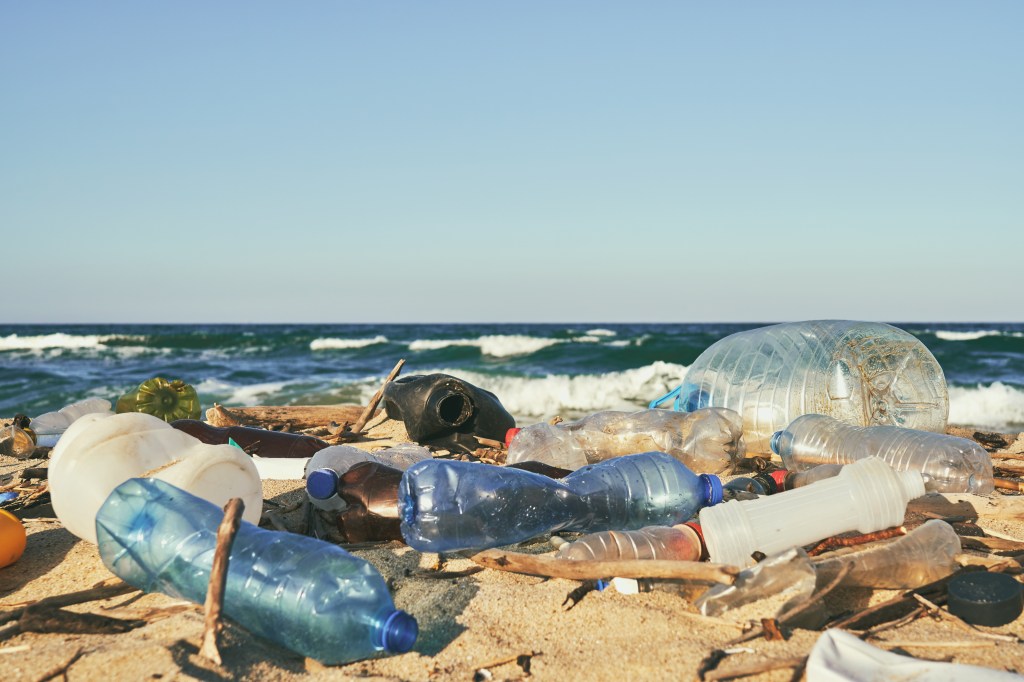
Their impact on our oceans and wildlife has been astounding.  The Great Pacific Garbage Patch in the Pacific Ocean is well-known.  It’s almost six times the size of Colorado and chock full of fishing nets, trash, and plastic debris.  Didn’t know there are now four additional garbage patches in other locations around the world.

Our oceans are saturated with more than eight million tons of plastic waste every year. And, now, microplastics—fragments of any type of plastic—are increasingly seen as a global environmental concern.  Big things eat littler things.  Tiny anchovies eat microplastics and are, in turn, gobbled up by fish that are sold in our supermarkets. It used to be said, jokingly, that we were made of corn and sugar.  Now we can add plastic to that list. 

For visual impact, just google the numerous, heart-wrenching pictures of dead whales and dolphins, their stomachs filled with plastic and trash, or watch the video of a plastic straw being removed from an endangered sea turtle’s nose.  The Coast Guard estimates that more than one million birds and 100,000 marine mammals die each year from eating or getting entangled in plastic debris. And, it’s not just marine animals.  Researchers studying floating plastics in the Persian Gulf region just found over 2,000 plastic bags in the stomach of a dead camel because it ate human trash.

Another depressing fact?  Plastic bags take about 10 to 20 years to decompose in landfills. It’s estimated that plastic bottles take 450 years.  As they degrade, they shed more microplastic shards into the air and water.  And don’t get us started on the microplastic from fleece!  

What can we do as news about plastic gets scarier?  We all recycle, of course.  We should also buy products in containers from recycled plastic.  But, to really make a difference, we need to support investment in better recycling technology, recyclable alternative packaging, and assure recycling is easy, accessible to all, and cheap.  As one newsperson wrote, “Like perms, gaucho pants, and bump-it clips, plastics appear to be trending downwards in the court of public opinion.”  This negativity has spurred companies to research cost-competitive, environmentally friendly replacements for conventional plastics.  Hurry!  

And, when you take those plastic bags back to the grocery store, include produce bags, newspaper bags, zipper sandwich bags, the plastic that covers your dry cleaning, and some acceptable cereal bags with your returns.  Even bubble wrap is recyclable. 

So, our wrinkled wisdom for today?  Seek out products like Dove that clearly indicate you are buying shampoo in 100% recycled bottles.  Lobby for recycle symbols that can be spotted without eyeglasses, much less a microscope!  Check your trash company’s website to learn what is recyclable in your area.  No shredded paper??  Advocate for new chips and snack bags—ones without that shiny layer of polypropylene that protects crispness, but can’t be recycled. Please, do we have to sacrifice munching on Cheetos to be environmentally responsible?  And, if you are worried about plastics AND waiting for grandkids, you might want to read the book Count Down about plastics’ impact on fertility. Or not.

P.S. In some areas, it’s again okay for our reusable bags to accompany us to the grocery store.  Don’t forget to wash them!  We like to think of it as an extension of handwashing.