
Wrinkled Wisdom – Good Taste…Bad Taste…Fading Taste

We’ve all been complimented on our good taste for something we’ve done or donned.  We easily recognize when something is in bad taste.  Fading taste?  It’s the term for the unhappy news that, as we age, our taste buds fade. 

Have you noticed that some of your favorite foods just don’t seem to taste the same?   Women can start losing their taste buds in their 40s.  For men, fading taste buds can happen in their 50s.  Salty and sweet flavors tend to decline first.  Bummer!  Love sugary desserts.  That sure explains why we’re dousing our fries with more salt and spooning more sugar into our morning coffee or tea.

We all, of course, assume our taste buds are on the tongue.  Yup!  Most of them.  But you can’t see them.  They are nestled within the visible bumps on the tongue called papillae.  We’ve got more taste buds in our throats and upper esophagi.  The papillae not only protect our taste buds; their rough texture helps with chewing and swallowing. 

Each of us could have once bragged about having 2,000 and 10,000 taste buds.  Not today!  Our buds have a short lifespan and are typically replaced every week or two.  This regenerative process slows down as we age, causing fading taste. 

Bet you can’t name the five basic tastes.  There’s sweet (a personal favorite), sour, salty, bitter, and umami.  Umami?  Got you on that one!  It describes a savory, meaty, or broth-like flavor.  It was named by a Japanese chemist who discovered the distinct taste of kombu, a seaweed broth, in 1908.  That’s over 100 years ago!  Could we consider renaming it, please??

Lately there has been discussion about adding fat and calcium to the big basic five.  There is reportedly significant scientific evidence supporting their independent detection by the tongue.  Think chicken fat, also known as schmaltz.  Hmmm.  Yes, the same word you may have used to describe an overly sappy love scene in a movie.  Some of us rank schmaltz higher than butter.  And, about calcium.  Interestingly, not talking about dairy products.  Can’t taste calcium in milk, for example.  Talking about veggies like collard greens and kale. 

You might be thinking, why isn’t spicy a taste?  That’s because the compounds in spicy foods activate pain and temperature receptors in the mouth, not taste buds.  They trick the brain into thinking it’s experiencing a burning sensation.  Eating spicy foods doesn’t make you tougher…. maybe just a sensation seeker??

Some people are supertasters.  They have a higher concentration of taste buds. Supertasters are born, not made.  It’s genetic.  But it isn’t all fun.  They have an aversion to bitter foods like coffee, dark chocolate, and certain vegetables.  Sorry about the chocolate.

Loss of taste is called ageusia.  It can cause loss of appetite.  Guess that’s a positive if you want to lose weight.  It’s a negative in terms of nutritional intake, which can lead to a decline in health.  As taste fades, some of us start eating more salty, sweet, and fatty foods that boost flavor.  Not a good idea.  That increases the risk of diabetes and cardiovascular disease.  We should ditch our Cheese Puffs?  Oh, no!

Taste buds also protect us.  Tastes wrong?  Mouth says spit it out.  Could be dangerous.  Remember, it’s not an excuse to spit out food at the dinner table just because you don’t like it.

So, our Wrinkled Wisdom for today?  Emphasize good oral hygiene and stay hydrated.  Use of tongues for identification is being investigated because lawbreakers often alter their fingerprints to hide their criminal records from law enforcement.  Can’t sandpaper your tongue!  Like fingerprints, no two tongue prints are the same.  So, brush your tongue and gargle unless you are planning to rob a bank!  And, thankfully, as we age, we will still have four important taste buds left: vodka, wine, cheese, and chocolate.

Wrinkled Wisdom – Is Healthy Eating Easy? No Way!

Yes, we all know we need to eat a healthy diet.  Duh.  And, yes, we’re tired of being inundated with ads admonishing us to cut out processed foods.  

Apparently, health experts don’t realize how very confusing these ads are!  Any food is considered processed if it has been canned, cooked, frozen, pasteurized, or packaged.  Hey, it’s just fine to eat canned vegetables, frozen fruits, and pasteurized dairy products.  And, canned foods are essential to surviving the zombie apocalypse! 

It’s the highly processed/ultra-processed foods that are harmful to our health.  They are loaded with salt, sugar, additives, added colors, and preservatives.  We’re looking at you, chicken nuggets and frozen pizzas.  Sorry!   And, it’s not just foods.  Add to that list of no-nos some sodas, bottled smoothies, and energy drinks.

But, how do we know what’s ultra-processed??  Just read the label?  Tough. 

The best advice we can give is to stay away from stuff that has five or more ingredients, especially a bunch you don’t recognize and can’t pronounce.  Or try covering the front of the box, jar, or package and just read the ingredients.  Do you still know what you’re buying?

Beware of sugars that end in “ose.”  Beware of artificial sugars like aspartame, sucralose, acesulfame-k, saccharin, and stevia.  A recent study just found that xylitol, a natural sugar alcohol (whatever that is) can cause heart attacks and strokes.  And, who would guess that salad dressings and toilet bowl cleaners have something in common – xanthan gum.  Maybe just put any product back on the shelf if one of its ingredients starts with an “x.” 

Those bad saturated fats have lots of names too: hydrogenated fats/oils, butter, cocoa butter, palm oil, coconut oil, lard, and suet.  And let’s not forget about salt.  Sodium chloride is table salt, but less obvious on labels are sodium benzoate disodium, disodium phosphate, brine, soy sauce, and the ever-famous MSG, monosodium glutamate.  Watch out for negative cholesterol build up from both.  Go easy.  Or not.

A few more facts about salt.  It’s essential for our bodies to function properly.  Salt’s ability to preserve food was a founding contributor to the development of civilization.  The Egyptians used it in mummification.  Roman soldiers got a salt allowance.  Ghandi led a Salt March in 1930, protesting Britain’s Salt Act that forced Indians to buy highly-taxed British salt.  Gotta have salt…especially on our fries. 

Upset to learn that bacon, sausage, lunch meat, and hot dogs are not only ultra-processed, but classified as carcinogenic by the International Agency for Research on Cancer.  We’ll ignore the fact that, technically, sliced bread also is ultra-processed!  Do look out for highly processed foods masquerading as healthy foods.  Breakfast cereal is a major offender along with flavored yogurts and granola, energy, and protein bars.  We love irony.

We all think organic foods are special, but a French supermarket found that half the organic products they sold were ultra-processed.  Sacré bleu!  That saves us guilt for not spending additional bucks on these more expensive foods!

Okay, we’ll smile smugly while snacking on raw veggies, almonds, and dried fruits.  But, screw it!  We aren’t giving up our favorite junk foods.  Bring on potato chips, Cheez-Its, candy, and ice cream.  And, who can give live without chocolates???

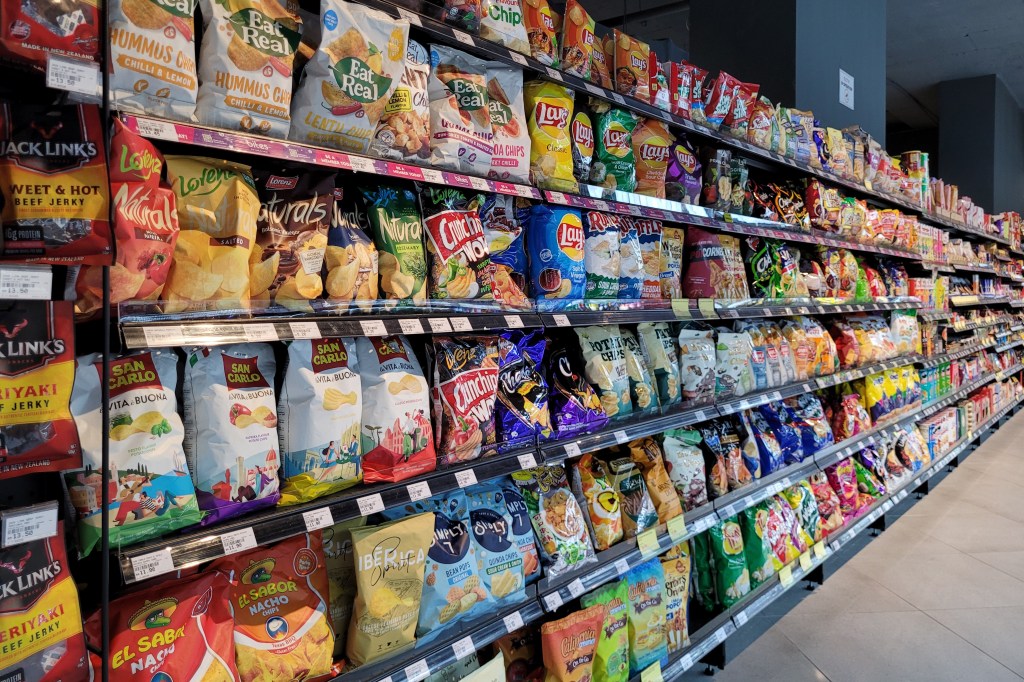
So, our Wrinkled Wisdom for today?   Shop the perimeter of your grocery store since most fresh stuff is along the edges.  Processed foods are in the middle aisles.  Oops.  Walk past the deli counter if you’re serious about eating healthy.  Don’t forget to bring your glasses for reading labels.  And, buy the natural peanut butter for the grandkids…without oils that extend shelf life and prevent it from separating.  Just find a tool to mix it before making the kids a PB&J.  We trust your creativity!  A corkscrew???  We know you’ve got one of those on hand.

Wrinkled Wisdom – Bugs: The Good, the Bad, and the Ugly

Word experts are unsure where the term bug came from.  One guess is the Middle English word bugge, something that’s scary.  Or, it could come from the Scottish, Welsh, and Irish words meaning goblin.  You get the drift.  Bugs aren’t popular.

Let’s start with some examples of the ugly: ants, cockroaches, fleas, mosquitos, spiders, termites, ticks, and wasps.  The ugly truth is that termites cause more property damage annually than floods, wildfires, and a hurricane—$5 billion per year.  Hmmm…seeing a termite is the equivalent of a black cat crossing your path. 

Oops!  We forgot bed bugs.  Reportedly, in the 1850s, sailors discovered a way to keep their ships bed bug free.  We don’t recommend it.  Their solution was cockroaches.

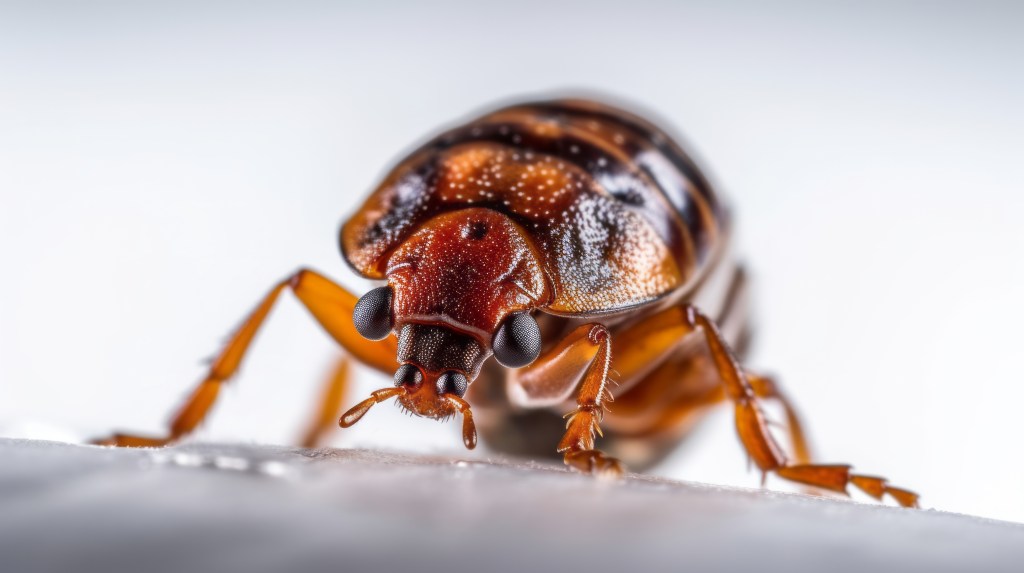
Anyone planning to go to Paris for the 2024 Summer Olympics might think twice.  Locals are losing their cool over bed bugs.  Viral posts on social media describe a crisis, yet pest control experts are shaking their heads.  They say the pests have only moderately increased and blame the media for the bed bug frenzy.  We’d be in a frenzy too if bunches of that bug in the photo above were crawling all over us!  Parisians fear the scare could keep spectators away from the Olympics and hurt France’s economy. 

Even if French exterminators go wild, bed bugs could still be crawling across Parisian hotel sheets during the Olympics.  They can go for a year without a meal and are expert at hiding.  Sacré bleu!

The bad?  A computer bug.  Geeks like to point to 1947 when a programmer found a dead moth in a Harvard University electromechanical computer, whatever that is.  She and her staff called it a bug to describe the problem.  It was a bug.  Literally.   

But they weren’t the first to call a problem a bug.  Nope.  Decades earlier, Thomas Edison used the word to describe a glitch during the process of innovation.  Edison is recognized for his contributions to many inventions.  The word bug is still trendy.  Not so much telegraph and phonograph. 

Reportedly, 80 percent of the world eats bugs and many cultures consider insects a delicacy.   No thanks!  We’ve griped about the promotion of insects as people food before.  But, some good news?  If a bunch of us aren’t enamored with eating bugs, apparently cows will?   The insect-farming industry is expanding rapidly across the globe to replace traditional animal feed.  

And, there’s a plus!  Feeding insects to livestock reduces the animals’ environmental footprint.   Think cow farts.  A single cow passes between 154 to 264 pounds of methane gas per year, warming global temperatures.   Insect feed reduces that methane.

Wait!  The Department of Agriculture just awarded a grant to research if black soldier flies that feast on dairy cow manure can then be fed to animals.  Can you turn manure into a cow, chicken, or fish???  Researchers are excited about transforming manure into a resource.  So, the expletive “let them eat sh#t” could become a reality?  Oh, wow, we hope not! 

And, lastly, let us put a bug in your ear…about the Rolling Stones’ recently announced 2024 North American tour.  It’s sponsored by AARP—the organization that used to be called the American Association of Retired Persons!  AARP is “dedicated to empowering Americans 50 and older to choose how they want to live as they age.” 

Mick Jagger is 80.  Keith Richards is 79.  Obviously, they choose to age on stage and in the spotlight.  Do we oldies choose to be in the audience clapping, screaming, reliving our younger days…and turning off our hearing aids?  AARP hopes so, offering tickets to its members days before the general public.  Woohoo!  Check the cities the tour hits. 

So, our Wrinkled Wisdom for today?  Watch the 2024 Summer Olympics on television.   For some positives about bugs, you can always attend Bug Fair 2024 at the Natural History Museum of Los Angeles County, a festival “celebrating our winged, multi-legged, and squirmy friends.”  We’ll take a pass.  Maybe invest in one of the companies processing and selling bugs for animal feed and keep those insects off our plates!  Admire cockroaches, which can live for two weeks after losing their heads.  Beware of candied cricket garnishes on some tequila drinks.  Buen apetito!