
Wrinkled Wisdom – Love Chocolate?  Lose the Guilt!

Americans gleefully gobble down almost three billion pounds of chocolate a year, about 10 to 12 pounds per person.  Okay, some of us scarf down even more.  

The seeds from the pods of the Theobroma cacao tree are the heart of chocolate.  Love that the Greek word for Theobroma translates to Food of the Gods.  Yes, we’re in heaven when munching on fudgy brownies and our favorite candies.

Heads up!  The words cacao and cocoa can cause confusion.  Cacao is the minimally processed seed of the tree that retains more nutrients and antioxidants.  The extra-processed cacao seed is called cocoa.  Lots of chocolate products list cocoa as the ingredient because it’s a word we all recognize.  Heck.  Can’t even figure out how to pronounce cacao…kuh-KOW or kuh-KAY-oh???

The natural plant compound theobromine is the key to the good news about chocolate, specifically dark chocolate, which contains the most theobromine.  Milk chocolate not so much and white chocolate very little since it’s made only with cocoa butter.  One comedian’s routine includes criticizing white chocolate as a prime example of an everyday corporate scam, joking that it is a fraudulent, disgusting impostor because it lacks the core solids found in real chocolate.

Theobromine has been linked positively to biological aging.  Yes!  A recent study indicated that people with higher levels looked better for their age!  Chocolate also delivers minerals like magnesium, iron, and copper tied to cardiovascular and metabolic health connected to how we age.

Some even call cacao a superfood because it contains more antioxidants than blueberries.  Researchers are currently studying whether concentrated doses of another plant compound in cacao, flavanols, which are full of antioxidants, can improve everything from eye disease to heart health, cancer risk, and cognitive abilities.  The powerful antioxidants in dark chocolate help blood vessels function, reduce stress, lower blood pressure, and boost moods and energy.  Sorry, milk chocolate lovers.  

Decades ago, pharmacists and doctors lauded chocolate as a miracle food to cure coughs, hangovers, and indigestion.  Benjamin Franklin thought chocolate might cure smallpox.  Wishful thinking, Ben!

Humans have been consuming chocolate forever.  There is evidence that the Olmec/Mayan people munched on chocolate 5,000 years ago.  They fermented pulp from cacao to create a drink with five percent alcohol.  Not exactly a chocolate martini, but betting it could give a bit of a buzz. 

In 1847, the British company J.S. Fry and Sons added sugar to chocolate and molded the first candy bar.  We get most of our chocolate from candy bars and snacks.  Nutritionists have actually named the “healthiest” candy.  Note the parentheses qualifying the use of the term healthy.  They list Snickers because its peanuts provide protein and the candy has less saturated fats.  Hershey’s Milk Chocolate Bars are next because of their simple ingredients and fewer additives.

Watching your weight?  A standard chocolate square is roughly 30 calories.  Willing to trade that for half a cup of Brussels sprouts??

Theobroma trees have lots of blossoms, but just 10 to 30 percent will produce a pod that survives to harvest.  A pod contains 20 to 60 beans, but it takes 400 beans to make a pound of chocolate.  It is a tough time for chocoholics.  Prices have spiked because of changing climate patterns and crop disease.  Some candy makers can no longer legally label their products chocolate because of reduced cocoa content to cut costs.  Might want to skip brands using the terms “chocolate-flavored” or “chocolatey.”   

So, our Wrinkled Wisdom for today?  Feeling a little down?  Eat chocolate!  Okay, don’t overdo it!  When serving chocolate desserts to family, brag about the benefits.  Keep chocolate away from pets; it can cause severe sickness.  Enjoy the line from the cartoonist who created the comic strip Peanuts: “All you need is love.  But a little chocolate now and then doesn’t hurt.”

Wrinkled Wisdom – Are You Left or Right…Handed?

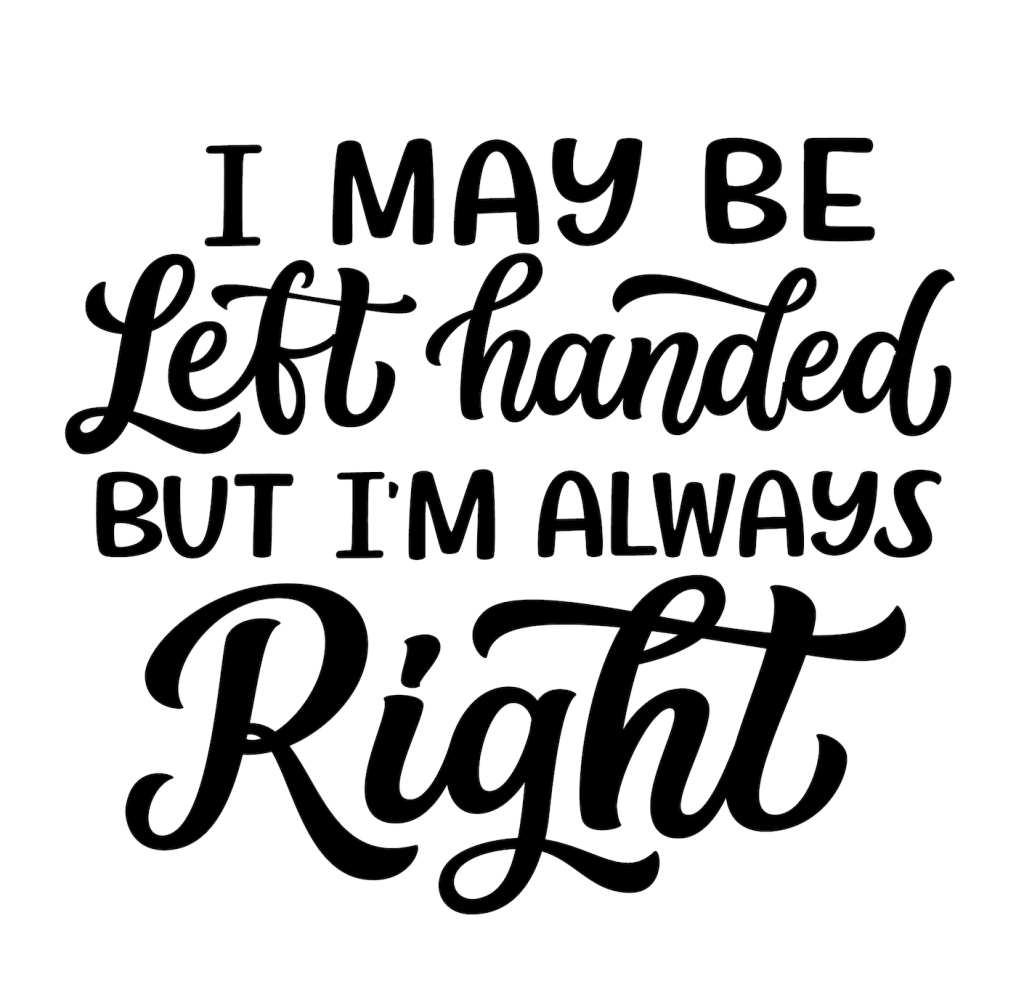
Typeface saying I may be left handed but I'm always right.

We just missed International Left Handers Day!  The August 13 celebration highlights the uniqueness of the roughly 10 percent of the world’s population who are left-handed.  Most of us are right-handed.  A tiny one percent is naturally ambidextrous. Wow.  Lucky them!  If they break an arm, they can still sign a check!

Southpaws weren’t always applauded.  They were once linked with bad luck and plain maliciousness.  The word “sinister” comes from the Latin word meaning “on the left side.”  In medieval times, lefties were accused of witchcraft and demonic possession.  Black magic has been referred to as the “left-hand path.”  

Guess it’s no coincidence that “right” stands for correct or proper.  The word “left” comes from the Anglo-Saxon word “lyft.”  It’s meaning?  Weak or broken.  It wasn’t until the late 20th century that psychologists reclassified left-handedness as a normal neurological variation rather than a defect.  The societal stigma has faded, thankfully!  Gee, finally???

Science tells us that the left side of the brain controls the right side of the body, and vice versa.  That means that a person’s dominant hand is controlled by the opposite hemisphere of the brain.  However, left-brained (logical) or right-brained (creative) personalities are largely a myth.  The two sides work together and complement each other.  

Yet, lefties have a number of advantages.  Music sees them as stars.  Left-handed musicians can play right-handed instruments like guitars, violins, and pianos.  Some players stress it even gives them an advantage in dexterity.  Lefties are said to be gifted at advanced mathematics.  It’s a controversial subject, but research has noted a moderate, yet significant correlation.

Sports!  Southpaws are loved!  They are statistically overrepresented in sports that require fast reactions against right-handed opponents, such as tennis and baseball.  Swimming?  Who cares.  Left-footedness is really a plus in soccer but it’s not tied to being left-handed.  Boxers who are lefties win more fights because they can confuse opponents with their stance.

Then there are the challenges left-handed people face in a world built for the right-handed.  Since the Industrial Revolution, machines have been developed for them, since they dominate the workforce.  Lefties adapt.  And, they can go online and find Lefty’s, which sells kitchen items, tools, school and office supplies,and more for left-handed individuals.

Then there is the dinner table.  Lefties suffer the inevitable “elbow wars” and jousting with right-handed diners unless they have the joy of sitting on a correct corner or the end of the table.

Left-handedness does not appear to be genetic.  Interestingly, fetuses show a clear hand preference, sucking one thumb over the other in the womb.  So, handedness is probably hardwired before birth.  

Popular psychology once promoted the idea that geniuses were mostly lefties.  A persistent, popular myth was that Einstein was left-handed.  Nope.  They’ve got the photos.  Other tidbits: four of six recent U.S. presidents were lefties: Bush senior, Clinton, Obama, and Reagan.  Children born to moms older than 40 are likely to be left-handed.  Lefties have more vivid dreams. 

So, our Wrinkled Wisdom for today?   Be thoughtful of left-handed guests when seating them at your dinner table.  Make sure those lefties are on your trivia team and your tennis team.  For your left-handed friends, entertain them with this line: the right side of the brain controls the left side of the body; therefore, all left-handed people are in their right minds!

P.S.  August 21st is National Senior Citizens Day.  Love how the day is described… dedicated to honoring the achievements, wisdom, and ongoing contributions of older adults to society.  Yes!  Meet you at the bar.  We’ll drink to that!

Wrinkled Wisdom:  What Was the Name of that Famous 1971 Movie?

It was the French Connection starring Gene Hackman!  Had to look it up.  Couldn’t remember.  But, then, give us a break.  We oldies may have seen up to 4,000 films by now.

Forgetting stuff is frustrating.  And, we’re all forgetting stuff.  Guess what?  There is a correlation with aging.  No kidding.  We forget a word or phrase once a day.  The kids stumble once a week.  Heck, we probably know over 42,000 words.  That gives some perspective and makes us feel better about forgetting a few.  

Reportedly, we most often forget proper nouns; historical figures; and; unsurprisingly, movie titles.  Additionally, studies show we forget words for specific tools and household items.  The kitchen stuff doesn’t trip us up.  Spatulas?  Colanders?  Got it.  Who cares if we are also prone to forget words we may have read but don’t use in everyday speech like foreign and obscure terms.  

Often, a word is on the tip of our tongue.  This is a phenomenon known as “lethologica.”  It was coined in the early 1900s and comes from the Greek word for forgetfulness.  Yes, it could be because of fatigue, distraction, rushed speech…or just being old.   A paper published in the journal Memory & Cognition states that many languages and cultures have wording similar to “tip of your tongue.”   We’re not alone.  And, sadly, there is no cure for forgetfulness.  

Some refer to this forgetfulness as slips of the tongue.  And, they can be embarrassing when you accidentally say something you didn’t mean to.  Remember when then President George H. W. Bush said in a 1988 campaign speech, “We’ve had some triumphs.  Made some mistakes.  We’ve had some sex…uh…setbacks.”  Oops!

We write a lot and often just can’t conjure up the perfect word.  Thank the stars for the online Thesaurus.  The adjective “energetic,” for example, can be exchanged for animated, lively, vigorous, brisk, bouncy, peppy, spirited, or full of beans.  Got a fav?? 

Usually, we soon recall a forgotten word, especially if we remember its first letter.  It just spontaneously pops back into our heads.  That’s normal.  But, because of the way our brains work, the brain associates the lost word with the event of losing it, making it likely to happen again.  Researchers have seen evidence that, if you continue to dig deeper for the word, you’ll be more likely to draw a blank the next time you want to include it in a sentence.

There is even a word for someone obsessed with recalling a word that they have forgotten.  They are a logomaniac.  Better just to cool it!!

Many want to give us lots of advice how to strengthen our memories.  Get 7 to 9 hours of “quality sleep.”  That term caught our attention.  So, we looked it up.  Means falling asleep within 15–20 minutes of lying down; and, if you wake up during the night, falling back asleep within 20 minutes.  In addition to getting enough sleep, recommendations include exercising to boost hippocampal blood flow and eating brain-healthy foods…our favorite is dark chocolate.  Stay organized.  Get rid of clutter to free up mental energy.  And, continue to learn new things.  

The hippocampus is interesting.  It’s the brain’s critical center for learning and memory.  And, get this, the hippocampus constantly prunes, overwrites, or deletes memories to maximize efficiency.  So, scientists argue that a forgetful mind is actually more efficient because old or unnecessary memories have been removed. 

So, our Wrinkled Wisdom for today?  Okay.  Okay.  Get a good night’s sleep.  Spend lots of time doing crosswords, Wordle, playing bridge, or Mahjong—whatever—to stimulate your brain.  When you are sipping a vodka tonic while chatting at the bar and you forget a word, say, “Oops…my hippocampus is updating my brain.”  Or mumble, I suffer from CRC…(can’t remember crap). 

Wrinkled Wisdom – And, Along Came a Spider…

An invasive spider is making the news as it rapidly spreads across the U.S.  The Joro spider came from East Asia via shipping containers.  If you live in Georgia, where the spider has been prevalent, mark your calendar for the 5th Annual Joro Spider Spotting Contest set for October 12.  

Reminds us of the nursery rhyme we all learned as kids.  Little Miss Muffet was frightened away by the spider that sat down beside her.  

She isn’t alone.  The fear of spiders is one of the most common phobias worldwide.  Do you sweat, tremble, feel nauseous, or faint when you spot a spider?  That’s a clue you have arachnophobia.  Fear of snakes is second.  And, close behind, glossophobia, fear of public speaking.  Take a big breath!

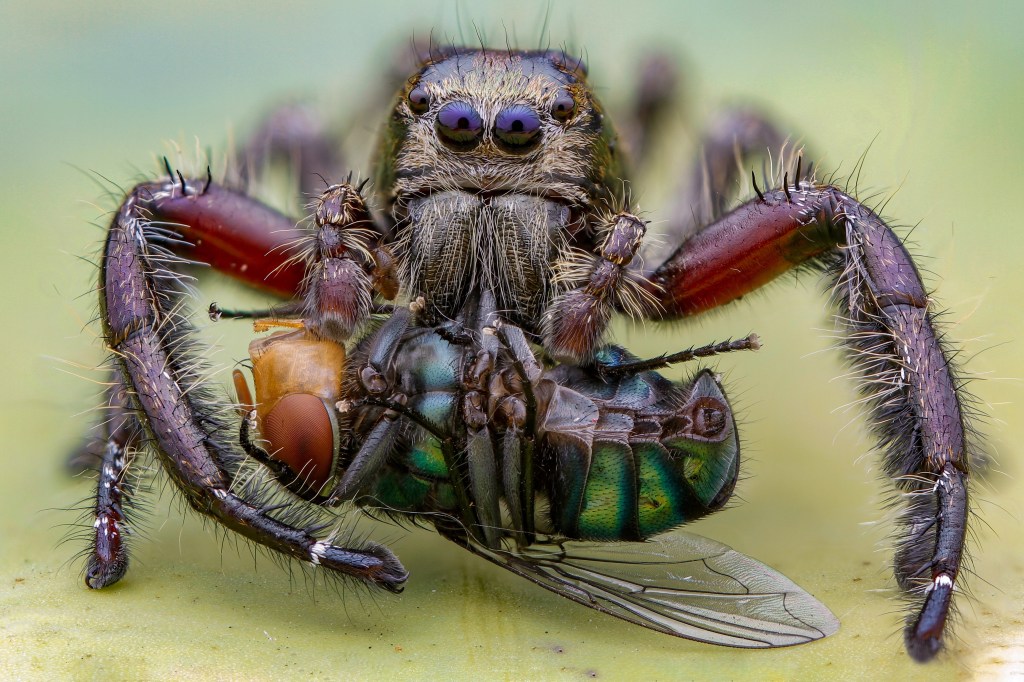
Giggled at a National Geographic article headlined: “Everything you think you know about spiders is wrong.  They’re not attracted to your body lotion.  They don’t crawl in your mouth at night.  In fact, they want nothing to do with you.”  Spiders are a diverse group with over 47,000 species.  But don’t worry; very few have the venom to kill a human.  In fact, they benefit humans by acting as a natural pest control, eating mosquitoes, flies, and various bugs.

Fear of spiders has instigated internet hoaxes disguised as news stories.  One alleged that a deadly, exotic spider was found lurking under toilet seats in airports and airplanes.

Speaking of airports, be very careful if you travel to Australia.  It gets the prize for hosting four of the ten top venomous spiders.  If bitten by the Australian Funnel-web spider, please check into a hospital.  ASAP.  The creepy female Australian Redback spider slimes its prey to immobilize it.  The Redback can’t eat us, but it’s bite is highly venomous and can cause extreme pain.

It is important not to squish spiders.  It’s messy and unattractive for your shoes and carpets.  But, more importantly, squashing a female may release dozens of baby spiders if she’s carrying eggs.  Some spider species eat other spiders, so when you kill one, you’re potentially tipping the balance in favor of the bad guys.  Also, relocating an indoor spider to the outdoors is a death sentence.  It can’t survive.  But you can absolve yourself of its death!

Spiders have no emotions.  They will never like you, even if you save them from the bathtub or shower.  They are not really fans of water since most will drown. Well, some do make air bubbles on their water-repellent hairs and survive for a surprising amount of time. 

Spiders have long been found in legends, myths, and superstitions.  The Spider Woman in Navajo history taught humans how to weave.  The goddess Athena is said to have challenged Arachne, a dyer’s daughter, to a weaving competition. Athena wove a tapestry depicting the majesty of the gods, while Arachne wove a masterpiece illustrating the various flaws and love affairs of the deities.  Arachne’s impressive work caused Athena to fly into a rage and transform Arachne into a spider.  This myth is the basis for the scientific term for spiders, Arachnids, as well as arachnophobia, describing the fear of spiders.

In China, spiders are an omen of good luck.  They are considered highly auspicious and are often called “happy insects.”  Wait!  No, they are not insects.  Spiders have eight legs; insects have six.  Folk wisdom suggests that seeing a spider in the morning brings happiness, while spotting one in the evening represents growing wealth.  And, no surprise, during the Middle Ages they were wrongly blamed for transmitting the bubonic plague.

So, our Wrinkled Wisdom for today?  If the grandkids want a pet spider, many recommend tarantulas.  Huh?  Guess they are easy to maintain and fun to observe. Just don’t pick them up!  Personally, we prefer dogs and cats.  Spiders hate some scents.  Spray the house with lavender or peppermint if they are a bother.  Horse chestnuts, surprisingly, act as a natural spider repellent.  And, remember, seeing a spider isn’t the biggest problem.  It’s when it disappears.

Wrinkled Wisdom – Alcohol Is Not the Answer

Why?  It just makes you forget the question.  We’ll drink to that!

One tequila, two tequila, three tequila, floor.  Yup.  We used to be able to put away a number of drinks.  Now our limit is two…with lots of water on the side.

If alcohol once made you feel fun and flirty but now makes you feel loopy, tired, and headachy, congratulations, writes a newspaper columnist—you’re probably getting old.

Makes sense.  Our alcohol tolerance decreases with age.  Our bodies contain less water and muscle mass, leading to a higher concentration of alcohol in our bloodstreams.   Our slower metabolism processes alcohol more sluggishly.  And, many of us take medications that don’t like to be mixed with liquor.  

The National Institute on Alcohol Abuse and Alcoholism recommends we seniors have no more than seven drinks a week, an average of one drink each day, and no more than three drinks on any given day.  Responsible drinking?  Many of us will describe that phrase as an oxymoron.

Recent research underscores a troubling trend in alcohol abuse—a spike in late-in-life drinking.  While we are less likely to drink than younger people, we engage in binge drinking more often.  The numbers are up 65%.  Remember that Ernest Hemingway said he drank to make other people more interesting.  Maybe that’s the reason for that bingeing?

If you want to limit your alcohol intake, the National Institutes of Health wants to help.  Its experts recommend that you write down your reasons for cutting back.  We want to get a good night’s sleep!   Track your drinking habits for a week and then set drinking goals.  Hmm…that sure contradicts the Italian proverb—age and glasses of wine should never be counted.  Finally, they advise posting those goals on a piece of paper you walk by every day.  What?  NIH thinks we have memory problems??

We seniors, are demonstrating our smarts on the road.  Older drivers are less likely to drink and drive.  That’s positive because one research study shows that, for we oldies, even one drink can impair our driving skills.  

In the moment, having a drink may seem like a good idea.  The next morning, though, you might find yourself regretting that extra glass of wine.  We’ve all awakened after a night of drinking with headaches, nausea, or sensitivity to light and sound.  You could describe it as feeling old in the morning after you drink like a younger self.  

There’s a very interesting term for the morning after that describes hangovers that result in anxiety, irritability, and feelings of regret…hang-xiety.  Doctors don’t really understand why some people feel this negativity the next day.  They guess it’s because alcohol reduces the amount of REM sleep you get, which can make you feel anxious.  Or, because drinking dehydrates you, that can affect your mood.

Good news!  Sugar in the morning can help a hangover by raising low blood sugar levels.  Of course, doctors recommend natural sugars from fruit or honey, not highly sugary drinks.  Sugars move alcohol out of your system faster.  And, be sure to drink lots of water and have a boring breakfast.  

So, our Wrinkled Wisdom for today:  Space out your drinks and add ice to dilute them.  An afternoon nap probably provides the biggest bang for the buck.  Gulp down that sugar the morning after.  Heck, a Coke works for us.  Start the day with toast, muffins, or oatmeal.  And, if life gives you lemons, add vodka.  What the hell???

Wrinkled Wisdom:  The Nighttime Bladder Battle 

Most of us make a dash to the bathroom in the middle of the night.  It’s not a topic we bring up over drinks with friends.  So, let’s explore these annoying interruptions to a good night’s sleep.

Nighttime urination becomes more common after we reach 60.  It’s just normal aging.  The drop in estrogen after menopause is counterproductive for women.  Declining testosterone is counterproductive for men not to mention an enlarged prostate.  But most of us simply are the victims of a decrease in the hormone that reduces urine production.  If you want to show off, call it by its name—the Antidiuretic Hormone (ADH).  

But, if you get up frequently during the night to hit the john, you might want to head to your doctor.  Keep a bladder diary to share with the doc.  Huh???  Just repeating medical advice.   Announce that you have nocturia and need help!  The doc will be so impressed.  

There are loads of recommendations to fight the nighttime bladder battle.  A number of exercises can reportedly help by toughening the muscles that support the bladder, like pelvic tilts.  

Or, your doctor can prescribe a diuretic medication to help get rid of extra water during the day before you head to bed.  Many are available at the drug store.  Entertained by the one branded Water Shed.  LOL!  We were thinking the name well describes those embarrassing times when coughing, laughing, or sneezing cause unwanted leakage.  They sure can be watershed moments!

We had no idea that fluid in our legs ends up in our bladders while we lay flat sleeping at night.  Huh?  This can cause a full bladder just when we don’t want it.  Two solutions.  Wear compression socks during the day.  Or…elevate your legs before you go to bed and reduce that fluid accumulation in your lower extremities.  Heck, we’re happy to pile up the pillows and raise those legs while we’re watching reruns of our favorite old movies on TV or reading a great book!  

Not crazy about the recommendation that we restrict liquids for two to four hours before going to sleep.  Four hours?  No way!  That means if you go to bed at 11 p.m., you have to stop drinking at 7 p.m.  News alert!  Alcohol is a diuretic.  The more you drink the more you’ll pee.  Doesn’t that argue that having wine after 7 p.m. is a positive???

If none of these tips work, there’s always the last resort—diapers.  You sure won’t be alone.  One company predicts that over 16 billon adult diapers will be sold globally in 2028.  Overnight adult diapers designed for maximum absorbency are often called incontinence briefs or overnight underwear.  They are thicker and more absorbent than products for daytime leaks.  Check your Medicare plan.  A few step up and offer coverage.  No pun intended. 

Who knew there is an organization called the National Association for Continence? It provides some recommendations to improve nighttime toileting.  Bunch of people fall while making that run to the bathroom in the dark.  Feel relieved if you just bump into furniture and stub your toe.  The group suggests using nightlights and clearing the way to the john, noting that objects easily seen during the day could be a tripping hazard in the middle of the night.  Seven steps to the john is ideal!

An aside—the sudden urge to head to the toilet when you arrive home has a name, latchkey incontinence.  It’s a Pavlovian-conditioned response that is an automatic, learned reaction.  Obviously doesn’t have to be linked to the sound of a turning key.  Garage door incontinence is the non-medical term. 

So, our Wrinkled Wisdom for today?  Hit the bathroom right before you hit the bed and pull the covers over your head.  If you get up in the middle of the night to pee, don’t drink anything while you’re up.  Use those nightlights especially when travelling.  Check out Botox injections for overactive bladders.  Google it.  Not making this us.  Oh, and if you have a dream about urinating, wake up…fast!! 

Wrinkled Wisdom – Good Taste…Bad Taste…Fading Taste

We’ve all been complimented on our good taste for something we’ve done or donned.  We easily recognize when something is in bad taste.  Fading taste?  It’s the term for the unhappy news that, as we age, our taste buds fade. 

Have you noticed that some of your favorite foods just don’t seem to taste the same?   Women can start losing their taste buds in their 40s.  For men, fading taste buds can happen in their 50s.  Salty and sweet flavors tend to decline first.  Bummer!  Love sugary desserts.  That sure explains why we’re dousing our fries with more salt and spooning more sugar into our morning coffee or tea.

We all, of course, assume our taste buds are on the tongue.  Yup!  Most of them.  But you can’t see them.  They are nestled within the visible bumps on the tongue called papillae.  We’ve got more taste buds in our throats and upper esophagi.  The papillae not only protect our taste buds; their rough texture helps with chewing and swallowing. 

Each of us could have once bragged about having 2,000 and 10,000 taste buds.  Not today!  Our buds have a short lifespan and are typically replaced every week or two.  This regenerative process slows down as we age, causing fading taste. 

Bet you can’t name the five basic tastes.  There’s sweet (a personal favorite), sour, salty, bitter, and umami.  Umami?  Got you on that one!  It describes a savory, meaty, or broth-like flavor.  It was named by a Japanese chemist who discovered the distinct taste of kombu, a seaweed broth, in 1908.  That’s over 100 years ago!  Could we consider renaming it, please??

Lately there has been discussion about adding fat and calcium to the big basic five.  There is reportedly significant scientific evidence supporting their independent detection by the tongue.  Think chicken fat, also known as schmaltz.  Hmmm.  Yes, the same word you may have used to describe an overly sappy love scene in a movie.  Some of us rank schmaltz higher than butter.  And, about calcium.  Interestingly, not talking about dairy products.  Can’t taste calcium in milk, for example.  Talking about veggies like collard greens and kale. 

You might be thinking, why isn’t spicy a taste?  That’s because the compounds in spicy foods activate pain and temperature receptors in the mouth, not taste buds.  They trick the brain into thinking it’s experiencing a burning sensation.  Eating spicy foods doesn’t make you tougher…. maybe just a sensation seeker??

Some people are supertasters.  They have a higher concentration of taste buds. Supertasters are born, not made.  It’s genetic.  But it isn’t all fun.  They have an aversion to bitter foods like coffee, dark chocolate, and certain vegetables.  Sorry about the chocolate.

Loss of taste is called ageusia.  It can cause loss of appetite.  Guess that’s a positive if you want to lose weight.  It’s a negative in terms of nutritional intake, which can lead to a decline in health.  As taste fades, some of us start eating more salty, sweet, and fatty foods that boost flavor.  Not a good idea.  That increases the risk of diabetes and cardiovascular disease.  We should ditch our Cheese Puffs?  Oh, no!

Taste buds also protect us.  Tastes wrong?  Mouth says spit it out.  Could be dangerous.  Remember, it’s not an excuse to spit out food at the dinner table just because you don’t like it.

So, our Wrinkled Wisdom for today?  Emphasize good oral hygiene and stay hydrated.  Use of tongues for identification is being investigated because lawbreakers often alter their fingerprints to hide their criminal records from law enforcement.  Can’t sandpaper your tongue!  Like fingerprints, no two tongue prints are the same.  So, brush your tongue and gargle unless you are planning to rob a bank!  And, thankfully, as we age, we will still have four important taste buds left: vodka, wine, cheese, and chocolate.

Wrinkled wisdom – Stop and Smell the Roses!

Great advice!  We should all take moments to relax and appreciate the simple pleasures and beauty of life.  And, this metaphorical reminder underscores the importance of the sense of smell.  Though smell sure has some contrasting definitions.  The positives?  Aroma, fragrance, scent, bouquet, perfume.  The nose-holding negatives?  Stench, stink, rank, putrefaction, funk, malodor.  Think bakeries versus dumpsters. 

You literally want to hold your nose when eating out, sitting in the movies or on an airplane, when someone nearby is reeking of perfume or aftershave—the classic good smell gone bad.  And then there’s… flatulence, which is more likely to happen on the plane ride because of the lower pressure that makes our ears pop and our body’s gasses expand.  Perhaps reconsider your preboarding food choices.

There is much written about how many senses we have, but sense of smell is definitely an important one.  It was the first sense to emerge.  Researchers say it’s some 1.5 billion years old, when complex life forms began to appear and earth may have smelled like rotten eggs due to hydrogen sulfide belched by microbes.  Want to survive, eat, and mate?   Learn to smell—foe, food, and friend.  Interestingly, smell is strongest at night.  So, certain fragrances can contribute to better sleep.  Fresh sheets???  A winner.

Smell is extremely important when it comes to attraction between two people. Body odor, produced by the genes that make up our immune system, influences our perceptions of others.  Some scientists think kissing evolved from sniffing and tasting the other person to test if they really are a match.  So, we base selection of our mate based on smell?  Yup!  Pretty much!  Wonder why smell hasn’t been noted in divorce proceedings?  The grounds for “no-fault” divorces should include loss of…the smell!

We are entertained by the personality traits indicated by a person’s favorite scents.  If you are drawn to fruity scents, you are likely to have a positive outlook and be spontaneous.  A preference for floral scents suggests you are confident, ambitious, and a high achiever.  People who are drawn to pine and fir scents are reportedly visionaries, thinkers and intellectuals.  Lovers of earthy scents like ginger and fennel are loyal, honest, easy-going, and adventurous.  If you like the smell of herbs, you are well-mannered, empathetic, and generous.  If the smell of exotic spices turns you on, you may appear introverted but are self-assured with a zealous appreciation of life.   But, can you be a mix and how does this mesh with sun signs?

Smell is also closely linked with memory.  Smells can bring back both positive and negative memories of loved ones, special events…or throwing up in church.  Cinnamon might remind you of a particular Christmas.  The smell of apple pie could tap memories of dinners with your grandparents when you were a kid.

The perfume industry has long developed fragrances that convey a vast array of emotions and feelings.  Perfumes can act like time machines.  Cotton Candy de Dua is a fragrance that really smells like…no surprise…cotton candy, which reminds us of those wonderful summers we spent as kids walking the boardwalk at the New Jersey shore.  Bottom line, we’d rather eat it than wear it!

Losing your sense of smell is a bummer.  Really affects your mood and even quality of life.  And, some bad news.  As we age our sense of smell can fade as those olfactory nerves degenerate.  On no!  Gone will be that sentimental pathway to memories.  Oh, but there’s an upside—Benjamin Franklin’s old adage that is still popular today: “Guests, like fish, begin to smell after three days.”  Guess loss of smell could make the relatives’ weeklong visit much more fun!

So, our Wrinkled Wisdom for today?  Smell the roses; smell the coffee.  Whatever makes you happy.  Remember: the nose knows, literally.  So, keep it clean, literally.  Choose your perfume or aftershave carefully and use it judiciously.  Shoot for the memory of an elephant and their sense of smell.  Those trunks are modified noses and, not surprisingly, incredibly powerful.   And, finally, as J. Paul Getty said: “Money is like manure.  You have to spread it around or it smells.”  So, be generous.

Wrinkled Wisdom – Are You Aiming to be a Centenarian?

Getting old sucks!  Hear that often.  So why do almost 70% of adults want to live to be 79 to 100 years old and 9% gleefully hope to past 100??  Okay!  Okay!  We get it!  You want to brag about being centenarian. 

Most people won’t get their wish.  After the dip in lifespans due to Covid and the obesity epidemic, studies say we can now expect to live 77.5 years.  Heck.  That isn’t even old!  The number of Americans expected to reach 100 and older in thirty years, 2054, is only 422,000.  Today’s U.S. population is a bit over 340 million people.  Bad odds. 

We’re addicted obit readers.  We’re curious about the deceased’s age and cause of death.  89?  Not bad. 76? Too early.  56. Damn.  Actor Val Kilmer, 65, pneumonia.  Bummer!  Celebrities who made it to 100 or more include Kirk Douglas and George Burns.  Wow, Olivia de Havilland lived to be 104!  Like de Havilland’s obit, the cause of death is often not mentioned.  Obvious.  Old age!

No matter how long we live, we want to stay healthy.  And, boy, advice is everywhere…podcasts, television, streaming, radio, print, TikTok, and TED Talks.  We like the Power 9.  It was developed by a researcher who studied cities around the world with the oldest populations, dubbed the Blue Zones.  Only one was in the United States, Linda Loma, CA.   Hmmm…it is home to the cancer-fighting Proton Therapy Treatment & Research Center.

Power 9 recommendations are based on the lifestyle habits of these healthiest, longest living people.  We’re all in on the first of the nine: move naturally.  No pumping iron.  No gym memberships needed.  Just do house and yard work and plant gardens.  Yes!

Next, have some purpose.  Give your life meaning.  Knowing your sense of purpose is worth up to seven years of extra life expectancy.  Work on that one!   Thirdly, downshifting is suggested.  Yikes.  Didn’t know that stress leads to chronic inflammation associated with every major age-related disease!  Of the suggested ways to mellow out, we’ll take naps and do happy hours.  

All the Blue Zone inhabitants follow the 80% Rule.  It arises from a Confucian mantra that calls for stopping eating when 80% full.  Hmmm.  Maybe we’ll start with dessert?   Next is Plant Slant.  Yes, we all know we should eat more fresh fruits and vegetables.

Wine @ 5!  Love this one!  These oldies drink…every day.  Lots of wine.  But no drinking alone or to excess.  Hang out with friends.  So, booze is the answer? 

Belong.  Blue Zone people seek community.  Think senior centers, card clubs, Mahjong, arts and crafts, book clubs, and dance classes.  You CAN teach old dogs new tricks.  Dance classes are a twofer—they also hit the number one dictum: keep moving.  Lastly, loved ones first.  Friends and groups can be family, too.  But, hey, why no mention in the Power 9 of a good night’s sleep??

Switzerland boasts that it has numbers of retreats where they can teach longevity techniques and feed you anti-aging foods.  Hmmm.  We can eat berries, leafy greens, fatty fish, nuts, and avocados anywhere!  You can also travel to Switzerland if you have dementia, hopefully have checked off your bucket list, and want to call it a day.  Canada is the euthanasia capital of the world…and it’s a cheaper plane trip.  Here in the U.S., Death with Dignity is only allowed in some states if you have a terminal illness.

Got a giggle reading that an endangered giant tortoise at the Philadelphia Zoo has just become a first-time mom at around 100 years old.  The zoo thinks dad is about 96.  Geez!  How do they live so long?  They have strong immune responses and suppress cancer cells.  Ahh…good genes!

So, our Wrinkled Wisdom for today?  Put living to be a centenarian on your to-do list if you want to take a shot.  Start saving for those many tooth implants you’ll need.  Insurance doesn’t cover the entire cost and they cost a bunch.  Don’t give up dark chocolate!  It provides important antioxidants, whatever they really are.  And, remember George Burns’ fun line:  “By the time you’re 80 years old you’ve learned everything.  You only have to remember it.”

Wrinkled wisdom – Sleep Tight, Wake up Bright

Diet, exercise, and sleep are the three pillars of a healthy life, especially as we age.  Okay, we can choose to eat nourishing foods.  We can choose to go to the gym or take long walks.  But we sure can’t just choose to get a good night’s sleep.  If only!

The Centers for Disease Control and Prevention reports that more than a third of U.S. adults don’t get the recommended seven hours or more of sleep every night.  We’re not alone!

Just walk into a drugstore and take a look at the sleep aid section.  It’s huge.  Options include Sleep-eze, ZzzQuil, Sominex, Kalms Night, melatonin, and more.  If they don’t work, doctors can prescribe Halcion, Restoril, Lunesta, Ambien, and Sonata.   Still not sleeping?  Explore functional mushrooms as seen on Shark Tank!

We stumbled onto an article headlined “simple things” to do to promote a good night’s sleep.  We like simple things so we read on.  First, avoid caffeine, nicotine, and alcohol four to six hours before sleep.  Hmmm…the alcohol thing could be tough.  We’re limited to happy hour?? 

Next, set your heater or air conditioner at a comfortable temperature.  Okay.  Makes sense.  Avoid your cell phone, TV, and computer an hour before you are ready to go to bed.  Huh?  So, what are we supposed to do for that hour??   Brushing your teeth takes minutes.  Guess it’s time to read a book.  Maybe Meditation for Beginners??

Apparently, some people do better with a small amount of noise when sleeping.  You could run your ceiling fan or buy a white noise machine.  They are very, very popular.  Creating a soothing nighttime playlist is an option.  Your partner’s snoring obviously doesn’t count.  Are earplugs the answer to that snoring??   Maybe not!  They are one of the most common objects removed from ears in hospitals’ emergency rooms.

Another tip about what to drink when.  Forget the coffee, tea, or juice when you wake up in the morning.  We’re supposed to drink water first.  That is certainly easy to do while making the coffee or tea or pouring the juice.  And let’s face it, we are thirsty in the mornings because we don’t drink a bunch at night so we don’t have to get up and pee multiple times.  Chug some water first thing?  Good with that.  Doctors recommend adding some soluble fiber powder…if we can remember.

So, when’s the best time to stop drinking water at night?  Two hours before going to bed.  Take your vitamins in the morning.  Don’t flood your body with fluids at night.  You’ll really regret it.

As we all well know, waking up in the middle of the night to head to the john has become more common as we’ve gotten older.  There’s a reason.  Our bodies produce less of the hormone that helps concentrate urine and retain fluids.  Peeing during the night even has a name—nocturia.   Some clever individual made it up by combining the Latin word for “night” and the Greek word for “urine.”  

What about naps?  Experts say a short nap—less than 90 minutes—is okay since it’s a lighter phase of sleep, not that deep, restorative sleep that you should get throughout the night.  Yet it’s often so elusive for so many.

And, experts say we should wear socks to bed.  Nothing to do with keeping your feet warm.  Actually, just the opposite.  Why?  Sends a signal to your brain to lower your core temperature—a cue that it’s time for…sleep! 

Lack of sleep sure hits our vanity hard.  None of us want to look in the mirror in the morning after a bad night’s sleep.  A tired face boasts droopy eyelids, circles under the eyes, sagging mouth corners, wrinkles, and fine lines.  No, it’s not just aging!  

So, our Wrinkled Wisdom for today?  Since sleep is our most important behavior, go for broke on a good mattress.  If you’re a “princess and the pea” type, sorry, you’re on your own.  In your next place, make sure the john is about seven steps from your bed.  You know why!  We wish you sweet dreams.  But putting that song on your nighttime playlist won’t help!   Oh, and remember—nightlights are your friends.