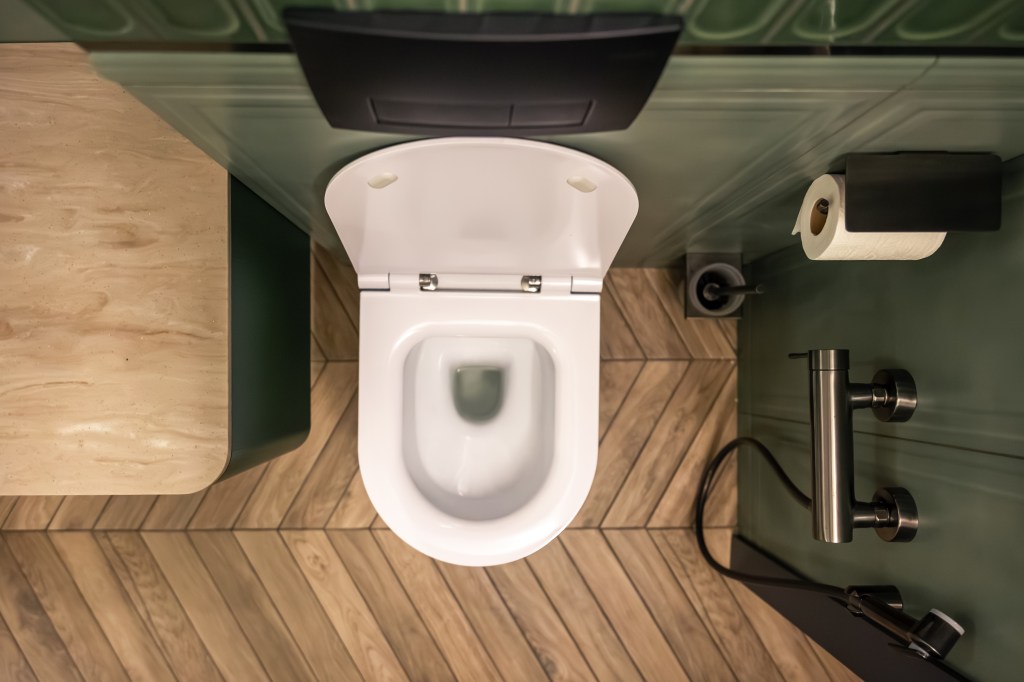

Wrinkled Wisdom:  The Nighttime Bladder Battle 

Most of us make a dash to the bathroom in the middle of the night.  It’s not a topic we bring up over drinks with friends.  So, let’s explore these annoying interruptions to a good night’s sleep.

Nighttime urination becomes more common after we reach 60.  It’s just normal aging.  The drop in estrogen after menopause is counterproductive for women.  Declining testosterone is counterproductive for men not to mention an enlarged prostate.  But most of us simply are the victims of a decrease in the hormone that reduces urine production.  If you want to show off, call it by its name—the Antidiuretic Hormone (ADH).  

But, if you get up frequently during the night to hit the john, you might want to head to your doctor.  Keep a bladder diary to share with the doc.  Huh???  Just repeating medical advice.   Announce that you have nocturia and need help!  The doc will be so impressed.  

There are loads of recommendations to fight the nighttime bladder battle.  A number of exercises can reportedly help by toughening the muscles that support the bladder, like pelvic tilts.  

Or, your doctor can prescribe a diuretic medication to help get rid of extra water during the day before you head to bed.  Many are available at the drug store.  Entertained by the one branded Water Shed.  LOL!  We were thinking the name well describes those embarrassing times when coughing, laughing, or sneezing cause unwanted leakage.  They sure can be watershed moments!

We had no idea that fluid in our legs ends up in our bladders while we lay flat sleeping at night.  Huh?  This can cause a full bladder just when we don’t want it.  Two solutions.  Wear compression socks during the day.  Or…elevate your legs before you go to bed and reduce that fluid accumulation in your lower extremities.  Heck, we’re happy to pile up the pillows and raise those legs while we’re watching reruns of our favorite old movies on TV or reading a great book!  

Not crazy about the recommendation that we restrict liquids for two to four hours before going to sleep.  Four hours?  No way!  That means if you go to bed at 11 p.m., you have to stop drinking at 7 p.m.  News alert!  Alcohol is a diuretic.  The more you drink the more you’ll pee.  Doesn’t that argue that having wine after 7 p.m. is a positive???

If none of these tips work, there’s always the last resort—diapers.  You sure won’t be alone.  One company predicts that over 16 billon adult diapers will be sold globally in 2028.  Overnight adult diapers designed for maximum absorbency are often called incontinence briefs or overnight underwear.  They are thicker and more absorbent than products for daytime leaks.  Check your Medicare plan.  A few step up and offer coverage.  No pun intended. 

Who knew there is an organization called the National Association for Continence? It provides some recommendations to improve nighttime toileting.  Bunch of people fall while making that run to the bathroom in the dark.  Feel relieved if you just bump into furniture and stub your toe.  The group suggests using nightlights and clearing the way to the john, noting that objects easily seen during the day could be a tripping hazard in the middle of the night.  Seven steps to the john is ideal!

An aside—the sudden urge to head to the toilet when you arrive home has a name, latchkey incontinence.  It’s a Pavlovian-conditioned response that is an automatic, learned reaction.  Obviously doesn’t have to be linked to the sound of a turning key.  Garage door incontinence is the non-medical term. 

So, our Wrinkled Wisdom for today?  Hit the bathroom right before you hit the bed and pull the covers over your head.  If you get up in the middle of the night to pee, don’t drink anything while you’re up.  Use those nightlights especially when travelling.  Check out Botox injections for overactive bladders.  Google it.  Not making this us.  Oh, and if you have a dream about urinating, wake up…fast!! 

Wrinkled wisdom – Sleep Tight, Wake up Bright

Diet, exercise, and sleep are the three pillars of a healthy life, especially as we age.  Okay, we can choose to eat nourishing foods.  We can choose to go to the gym or take long walks.  But we sure can’t just choose to get a good night’s sleep.  If only!

The Centers for Disease Control and Prevention reports that more than a third of U.S. adults don’t get the recommended seven hours or more of sleep every night.  We’re not alone!

Just walk into a drugstore and take a look at the sleep aid section.  It’s huge.  Options include Sleep-eze, ZzzQuil, Sominex, Kalms Night, melatonin, and more.  If they don’t work, doctors can prescribe Halcion, Restoril, Lunesta, Ambien, and Sonata.   Still not sleeping?  Explore functional mushrooms as seen on Shark Tank!

We stumbled onto an article headlined “simple things” to do to promote a good night’s sleep.  We like simple things so we read on.  First, avoid caffeine, nicotine, and alcohol four to six hours before sleep.  Hmmm…the alcohol thing could be tough.  We’re limited to happy hour?? 

Next, set your heater or air conditioner at a comfortable temperature.  Okay.  Makes sense.  Avoid your cell phone, TV, and computer an hour before you are ready to go to bed.  Huh?  So, what are we supposed to do for that hour??   Brushing your teeth takes minutes.  Guess it’s time to read a book.  Maybe Meditation for Beginners??

Apparently, some people do better with a small amount of noise when sleeping.  You could run your ceiling fan or buy a white noise machine.  They are very, very popular.  Creating a soothing nighttime playlist is an option.  Your partner’s snoring obviously doesn’t count.  Are earplugs the answer to that snoring??   Maybe not!  They are one of the most common objects removed from ears in hospitals’ emergency rooms.

Another tip about what to drink when.  Forget the coffee, tea, or juice when you wake up in the morning.  We’re supposed to drink water first.  That is certainly easy to do while making the coffee or tea or pouring the juice.  And let’s face it, we are thirsty in the mornings because we don’t drink a bunch at night so we don’t have to get up and pee multiple times.  Chug some water first thing?  Good with that.  Doctors recommend adding some soluble fiber powder…if we can remember.

So, when’s the best time to stop drinking water at night?  Two hours before going to bed.  Take your vitamins in the morning.  Don’t flood your body with fluids at night.  You’ll really regret it.

As we all well know, waking up in the middle of the night to head to the john has become more common as we’ve gotten older.  There’s a reason.  Our bodies produce less of the hormone that helps concentrate urine and retain fluids.  Peeing during the night even has a name—nocturia.   Some clever individual made it up by combining the Latin word for “night” and the Greek word for “urine.”  

What about naps?  Experts say a short nap—less than 90 minutes—is okay since it’s a lighter phase of sleep, not that deep, restorative sleep that you should get throughout the night.  Yet it’s often so elusive for so many.

And, experts say we should wear socks to bed.  Nothing to do with keeping your feet warm.  Actually, just the opposite.  Why?  Sends a signal to your brain to lower your core temperature—a cue that it’s time for…sleep! 

Lack of sleep sure hits our vanity hard.  None of us want to look in the mirror in the morning after a bad night’s sleep.  A tired face boasts droopy eyelids, circles under the eyes, sagging mouth corners, wrinkles, and fine lines.  No, it’s not just aging!  

So, our Wrinkled Wisdom for today?  Since sleep is our most important behavior, go for broke on a good mattress.  If you’re a “princess and the pea” type, sorry, you’re on your own.  In your next place, make sure the john is about seven steps from your bed.  You know why!  We wish you sweet dreams.  But putting that song on your nighttime playlist won’t help!   Oh, and remember—nightlights are your friends.
