

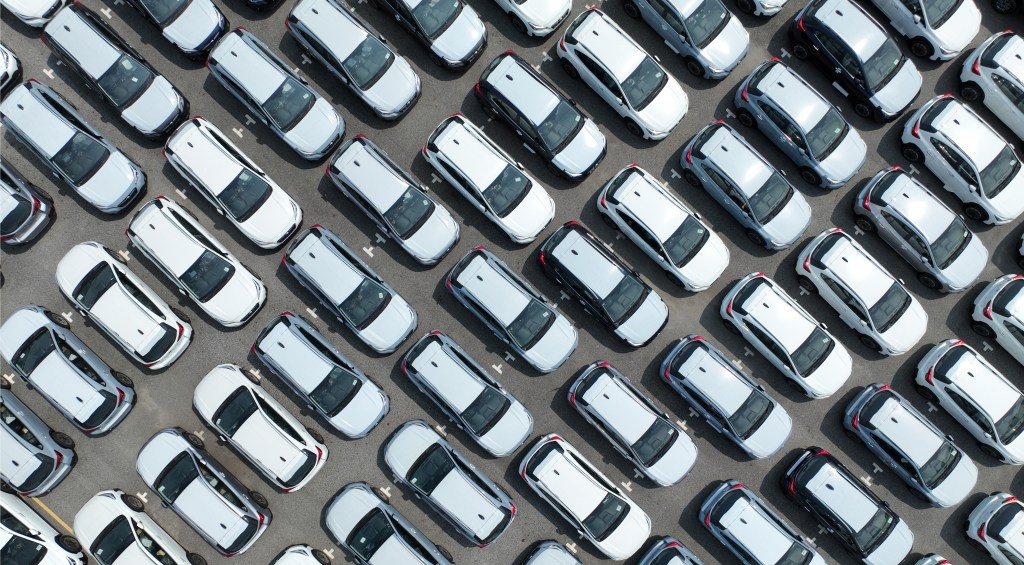

Remember how excited we used to get about buying a new car? Loved choosing a color and matching it with the interior and seat colors. Loved that new car smell and shine. Loved the new audio systems that let us play for our favorite albums on cassette tapes and CDs while driving! Not today! New models are loaded with tech that is more overwhelming than impressive. The manual sure doesn’t help. Buying a new car is now a source of frustration, not joy. And, prices? OMG!
Just look at those dashboard designs. Swapping knobs and sliders for intricate touch screen displays on dashboards in new cars is more distracting than useful. How about simple, reachable controls that we can use without taking our eyes off the road??
A friend drove her granddaughter’s car recently and couldn’t find the lights or the windshield wipers. Enjoyed the line from the guy who said jokingly that his wife’s new car came with a semester at MIT to learn to use the turn signal. Could that the reason why so many drivers don’t give you a head’s up when they are turning? Doubt it.
Remember when we were kids and could name the make and model of every car on the road? Each design was distinct. Check out the look of today’s Chevys and Jaguars. The difference? The price. We can blame the designs on aerodynamics, which led to these similar shapes and silhouettes across brands. The aerodynamic design reduces drag and improves fuel efficiency. But it’s made cars monotonous!
Speaking of monotonous, black, gray, silver, and white cars now account for about 75 percent of cars sold. One reason for this descent into automotive blandness? Brighter colors raise the cost of the car. Seems ages since Bruce Springsteen sang about a pink Cadillac and Prince warbled about a little red Corvette.
We learned to drive on a stick-shift green and white 1957 Chevy. There is some good news! Paint companies have developed technologies to apply two-tone paint on cars more efficiently, reducing costs. Two-tone paint jobs are making a comeback. You still pay a premium, of course.
The term “wretched excess” was used to describe the cars we saw on the road in the late 1950s. The 1959 Cadillac De Ville was almost 19 feet long! Parallel parking that baby must have been entertaining. And, think of the gas mileage!
We are all interested in saving money at the pump, hence the popularity of today’s hybrids and electric cars (EVs). Interestingly, nothing new. The first successful EV made in the U.S. debuted around 1890. Its top speed was 14 mph. A speed monster! Henry Ford’s 1908 Model T dealt a deadly blow to the EV. It was affordable. Gas was cheap. And, electricity for EVs was rare outside of cities. Sound familiar? EVs all but disappeared by 1935.
In 1905, a patent was first filed for a hybrid. It was designed to use the electric motor to augment the gasoline engine and increase acceleration from zero to a sizzling 25 mph in 10 seconds. Whoopie!
They say you’re never too old to learn something new. But it gets annoying! We’re not alone. Studies show new car owner satisfaction has dropped.
So, our Wrinkled Wisdom for today? Let’s lobby for a return to “dumb cars” with fewer exasperating tech features and unnecessary bells and whistles! Do your research before buying a new car. Know your car’s trade-in value so you won’t be duped. Test drive your favorite models. Oh, and eat before you go to the dealership. Buying a car can take hours and hunger can inhibit your ability to make a good decision. Or, use a car broker, never set foot in a dealership, and save some calories.
P.S. Please note that the smell we referenced as an olfactory perk of a new car is caused by chemicals being released by the car’s leather and plastic, which can cause eye and nose irritation. Even has a name: off-gassing! No worries. Easy fix. Just open the windows.








 Wrinkled Wisdom