
Wrinkled Wisdom – Good Taste…Bad Taste…Fading Taste

We’ve all been complimented on our good taste for something we’ve done or donned.  We easily recognize when something is in bad taste.  Fading taste?  It’s the term for the unhappy news that, as we age, our taste buds fade. 

Have you noticed that some of your favorite foods just don’t seem to taste the same?   Women can start losing their taste buds in their 40s.  For men, fading taste buds can happen in their 50s.  Salty and sweet flavors tend to decline first.  Bummer!  Love sugary desserts.  That sure explains why we’re dousing our fries with more salt and spooning more sugar into our morning coffee or tea.

We all, of course, assume our taste buds are on the tongue.  Yup!  Most of them.  But you can’t see them.  They are nestled within the visible bumps on the tongue called papillae.  We’ve got more taste buds in our throats and upper esophagi.  The papillae not only protect our taste buds; their rough texture helps with chewing and swallowing. 

Each of us could have once bragged about having 2,000 and 10,000 taste buds.  Not today!  Our buds have a short lifespan and are typically replaced every week or two.  This regenerative process slows down as we age, causing fading taste. 

Bet you can’t name the five basic tastes.  There’s sweet (a personal favorite), sour, salty, bitter, and umami.  Umami?  Got you on that one!  It describes a savory, meaty, or broth-like flavor.  It was named by a Japanese chemist who discovered the distinct taste of kombu, a seaweed broth, in 1908.  That’s over 100 years ago!  Could we consider renaming it, please??

Lately there has been discussion about adding fat and calcium to the big basic five.  There is reportedly significant scientific evidence supporting their independent detection by the tongue.  Think chicken fat, also known as schmaltz.  Hmmm.  Yes, the same word you may have used to describe an overly sappy love scene in a movie.  Some of us rank schmaltz higher than butter.  And, about calcium.  Interestingly, not talking about dairy products.  Can’t taste calcium in milk, for example.  Talking about veggies like collard greens and kale. 

You might be thinking, why isn’t spicy a taste?  That’s because the compounds in spicy foods activate pain and temperature receptors in the mouth, not taste buds.  They trick the brain into thinking it’s experiencing a burning sensation.  Eating spicy foods doesn’t make you tougher…. maybe just a sensation seeker??

Some people are supertasters.  They have a higher concentration of taste buds. Supertasters are born, not made.  It’s genetic.  But it isn’t all fun.  They have an aversion to bitter foods like coffee, dark chocolate, and certain vegetables.  Sorry about the chocolate.

Loss of taste is called ageusia.  It can cause loss of appetite.  Guess that’s a positive if you want to lose weight.  It’s a negative in terms of nutritional intake, which can lead to a decline in health.  As taste fades, some of us start eating more salty, sweet, and fatty foods that boost flavor.  Not a good idea.  That increases the risk of diabetes and cardiovascular disease.  We should ditch our Cheese Puffs?  Oh, no!

Taste buds also protect us.  Tastes wrong?  Mouth says spit it out.  Could be dangerous.  Remember, it’s not an excuse to spit out food at the dinner table just because you don’t like it.

So, our Wrinkled Wisdom for today?  Emphasize good oral hygiene and stay hydrated.  Use of tongues for identification is being investigated because lawbreakers often alter their fingerprints to hide their criminal records from law enforcement.  Can’t sandpaper your tongue!  Like fingerprints, no two tongue prints are the same.  So, brush your tongue and gargle unless you are planning to rob a bank!  And, thankfully, as we age, we will still have four important taste buds left: vodka, wine, cheese, and chocolate.

Wrinkled Wisdom – Good Hair, Good Mood, Good Day

In our youth, hippies—including some of us—sported long hair as a symbol of rebellion.  The 1967 musical Hair tells the story of the movement’s nonconformity, sexual revolution, and loathing for the Vietnam War and its horrifying draft lottery.  Young men waited in immense anxiety and fear as birthdates were pulled from a bin, mandating who would be forced to put on a uniform and cut off that long hair!

A line from Hair’s title song is our mantra today: “Give me a head with hair.” 

Hair is important!  It plays an essential role in regulating body temperature.  It’s linked to self-confidence and self-esteem, intimating youthfulness in women and virility in men.

Wow.  Statistics indicate that women commonly start experiencing hair loss between the ages of 40 and 50.  For men, it’s worse!  Hair loss can start in their late teens.  A quarter of all men show signs of male pattern baldness by age 30 and those numbers hit 50% by age 50.  Hair-raising stats!!!!  Covid didn’t help; caused hair shedding.  And, there’s even a term for those of us losing hair or balding.  We are follically-challenged. 

So, what are we ladies to do??  AI thinks the bob is the best haircut for 70-year-old and older women.  Our movie star idols sure agree.  Gone are their long tresses.  Most now have a “curly” bob.  A son recently commented at dinner that his mom’s new bob was an old lady “do.”  He was right.  But, no dessert for him!

Men can get away with shaving their heads and looking cool.  A comb over?  NEVER!  They can grow facial hair to distract from their baldness.  Forget the facial hair option for we women! 

We always thought having our hair cut often would make it grow faster.  Nope!  Also thought rigorous brushing would stimulate blood flow to the scalp and boost hair growth.  Nope!  Neither is true.  In fact, brushing causes friction, leading to cuticle damage and hair breakage.

The global market for hair loss treatment products was about $10 billion in 2024.  Yikes!  Americans obviously aren’t the only ones who are paranoid about losing their hair!  Rogaine.  Propecia.  Something called Peptides??  Can’t forget the supplements—vitamins, minerals, and herbal blends.  The FDA has even approved several low-level laser devices to restore hair.  One company sells a cap with lasers inside for $1,699.00!  We didn’t budget for that.

There are shampoos, conditioners, serums, and oils galore that claim to promote hair growth.  Some even contain caffeine.  No, having your cup of coffee in the morning won’t help hair growth, but there are studies indicating that applying caffeine topically could be beneficial.  Taking a pass on that. 

Then there is PRP, platelet-rich plasma. A doctor takes your blood, which is processed to concentrate platelets, and then injects it into your scalp.  OUCH!  Don’t forget hair plugs.  Well, not the old kind of plugs that are passe due to their unnatural appearance, scarring, and limited density!  Doctors now offer FUE or FUT hair grafts.  Know your stuff before the doc pulls out the scalpel.

With these countless products on the market to grow hair, you would think that if one delivered miracle results, we would all know about it.  Oh, the thing experts do agree on?   Loosen that ponytail!!  Excessive pulling and tension on the hair shaft causes hair loss. So, our Wrinkled Wisdom for today?  Brush your hair just a tad.  Don’t wash it daily.  Counterintuitively, start using baby shampoo.  Eat omega-3 foods…nuts, fish, and avocados.  Yes, wigs are a last resort but hats work on bad hair days.  When out for drinks, have a friend keep an eye on that “hot spot” in the back of your head and have a comb handy.   You know what we’re talking about.  Remember, you can’t control everything—your hair was put on your head to emphasize that!

Wrinkled Wisdom:  A Lesson in Slang

Walt Whitman described slang as “…imagination and humor, breathing into its nostrils the breath of life.”  Guardians of standard English roll their eyes and bemoan slang’s degrading impact.  They are ignored.  Slang has long permeated everyday speech.  Heck, there is even an Oxford Dictionary of Modern Slang that includes over 6,000 slang words and expressions from the 20th and 21st centuries.

Each generation creates its own unique slang.  This informal language conveys meaning quickly and expressively.   It establishes a sense of community among its speakers and listeners.   As someone once said, “Slang is like a secret handshake.  If you understand it, you’re in the club.” 

Remember saying we “dig it” to describe something we really liked.  You never wanted to be a square, our term for someone uncool.  That would be a bummer!  A fink was a snitch and we called the television the boob tube. 

In our youthful 1960s and 1970s, hippie slang was in.  Groovy.  Far out.  Cool.  Flower power.   “Cool” has had staying power.   Cool!

Cannabis was a symbol of hippie rebellion.  Yikes, remember Woodstock?  Our slang for marijuana was dope—one syllable not four.  We were recently politely critiqued by a young man for using the word dope.  Showing our age, apparently.   The kids refer to it as weed.  Who cares.  If we oldies are using cannabis products, it’s probably for medical reasons!  Oh, and the word dope in slang now means cool or awesome. 

Giggled reading AARP’s article titled: A Guide to Understanding Today’s Slang: We deciphered some key phrases to help you understand your grandkids.

We’ve got a few down.  OMG often conveys our feelings very effectively.  We type LOL in response to a fun text from a friend.  We really are often laughing out loud.  But, LOL, we are not going to buy that tee shirt sporting the catchy phrase: “I’m a TMI Enjoyer…You Can Never Tell Me Too Much.”  Though, admit it.  Some TMI can be very entertaining!   Didn’t know that in the 1960s a San Francisco Chronicle columnist popularized LOL as an acronym for “little old lady.”  Don’t tell the grandkids!

But, that’s about it.   Other acronyms?  IYKYK stands for “if you know, you know.”  FOMO?  Fear of missing out.  GOAT?  Greatest of all time.  Then there is fit— short for outfit.  Lit?  Something that is amazing or exciting.  Gucci reportedly means cool or going well.  That one surprised us.  Do kids even know it’s a luxury brand that’s hard on the pocketbook?  Wait.  Maybe the slang originated with the rapper Gucci Mane??  Yes.  We know.  Never heard of him either.

Knowing today’s slang doesn’t just facilitate communicating with the grandkids.  Better pay attention if you want to finish a crossword puzzle these days!  Puzzles are skewing younger.  Phat?  It will be clued as something that is very attractive or appealing.  Bae is your main squeeze in modern lingo and the answer in many recent puzzles.  We got ticked when a recent puzzle clued an answer as meaning agreement or relatable in slang.  Mood??  Huh??  We were in no mood for that.   

Surprised to learn that the word “mother” today doesn’t always mean…well, mother.  Gen Z, 13-28-year-olds, use it as slang to describe someone they admire or respect.  A positive!  Maybe its source is the drag culture, where “mother” has long been used to affectionately refer to the people who inspired them and/or their personas.  Remember RuPaul, an American drag queen, television host, singer, and actor, wrote the hit dance song “Call Me Mother”??

So, our Wrinkled Wisdom for today?  Quiz the grandkids about any slang you should be up on.  Doubt you’ll want to add any of it to your vocabulary, but knowledge is power!  When the grandkids use slang around you, just laugh and say “you really slay me!”  It’s common slang today as it was in the 70s and 80s.  So, you should feel comfortable spouting the phrase.  We’re still with it!

Wrinkled Wisdom – Are You Aiming to be a Centenarian?

Getting old sucks!  Hear that often.  So why do almost 70% of adults want to live to be 79 to 100 years old and 9% gleefully hope to past 100??  Okay!  Okay!  We get it!  You want to brag about being centenarian. 

Most people won’t get their wish.  After the dip in lifespans due to Covid and the obesity epidemic, studies say we can now expect to live 77.5 years.  Heck.  That isn’t even old!  The number of Americans expected to reach 100 and older in thirty years, 2054, is only 422,000.  Today’s U.S. population is a bit over 340 million people.  Bad odds. 

We’re addicted obit readers.  We’re curious about the deceased’s age and cause of death.  89?  Not bad. 76? Too early.  56. Damn.  Actor Val Kilmer, 65, pneumonia.  Bummer!  Celebrities who made it to 100 or more include Kirk Douglas and George Burns.  Wow, Olivia de Havilland lived to be 104!  Like de Havilland’s obit, the cause of death is often not mentioned.  Obvious.  Old age!

No matter how long we live, we want to stay healthy.  And, boy, advice is everywhere…podcasts, television, streaming, radio, print, TikTok, and TED Talks.  We like the Power 9.  It was developed by a researcher who studied cities around the world with the oldest populations, dubbed the Blue Zones.  Only one was in the United States, Linda Loma, CA.   Hmmm…it is home to the cancer-fighting Proton Therapy Treatment & Research Center.

Power 9 recommendations are based on the lifestyle habits of these healthiest, longest living people.  We’re all in on the first of the nine: move naturally.  No pumping iron.  No gym memberships needed.  Just do house and yard work and plant gardens.  Yes!

Next, have some purpose.  Give your life meaning.  Knowing your sense of purpose is worth up to seven years of extra life expectancy.  Work on that one!   Thirdly, downshifting is suggested.  Yikes.  Didn’t know that stress leads to chronic inflammation associated with every major age-related disease!  Of the suggested ways to mellow out, we’ll take naps and do happy hours.  

All the Blue Zone inhabitants follow the 80% Rule.  It arises from a Confucian mantra that calls for stopping eating when 80% full.  Hmmm.  Maybe we’ll start with dessert?   Next is Plant Slant.  Yes, we all know we should eat more fresh fruits and vegetables.

Wine @ 5!  Love this one!  These oldies drink…every day.  Lots of wine.  But no drinking alone or to excess.  Hang out with friends.  So, booze is the answer? 

Belong.  Blue Zone people seek community.  Think senior centers, card clubs, Mahjong, arts and crafts, book clubs, and dance classes.  You CAN teach old dogs new tricks.  Dance classes are a twofer—they also hit the number one dictum: keep moving.  Lastly, loved ones first.  Friends and groups can be family, too.  But, hey, why no mention in the Power 9 of a good night’s sleep??

Switzerland boasts that it has numbers of retreats where they can teach longevity techniques and feed you anti-aging foods.  Hmmm.  We can eat berries, leafy greens, fatty fish, nuts, and avocados anywhere!  You can also travel to Switzerland if you have dementia, hopefully have checked off your bucket list, and want to call it a day.  Canada is the euthanasia capital of the world…and it’s a cheaper plane trip.  Here in the U.S., Death with Dignity is only allowed in some states if you have a terminal illness.

Got a giggle reading that an endangered giant tortoise at the Philadelphia Zoo has just become a first-time mom at around 100 years old.  The zoo thinks dad is about 96.  Geez!  How do they live so long?  They have strong immune responses and suppress cancer cells.  Ahh…good genes!

So, our Wrinkled Wisdom for today?  Put living to be a centenarian on your to-do list if you want to take a shot.  Start saving for those many tooth implants you’ll need.  Insurance doesn’t cover the entire cost and they cost a bunch.  Don’t give up dark chocolate!  It provides important antioxidants, whatever they really are.  And, remember George Burns’ fun line:  “By the time you’re 80 years old you’ve learned everything.  You only have to remember it.”

Wrinkled Wisdom:  How Are Those New Year’s Resolutions Coming Along??

If you’ve already blown off your New Year’s resolutions, join the club.  Eighty percent of Americans give up on their resolutions by the second Friday of January.  That Friday even has a name—Quitter’s Day!  And, just 10% follow through on this centuries-old tradition.  Ahh, commitment issues!

Not surprisingly, we seniors are the least interested in making a resolution.  Been there; done that.  Who needs to drastically alter their routines at our age??  Guess we could resolve to never again to make a New Year’s resolution?  It’s the young’uns, 19 to 29, who are most likely to make at least one resolution and most feel pressured to do so.

What’s on the list of resolutions most commonly made each year?  Exercise more.  Like lift more…slices of pizza???  Oops!  That’s in conflict with the resolution to eat healthier.  Learn a new skill?  You’ve got to be kidding. 

Top resolutions also include a vow to save more money.  Huh?  We’re long retired.  We’ve built our nest egg.  Now we need to spend wisely and manage our investments so they see us through our golden years. 


We had to giggle about the sponsor of the septuagenarian Rolling Stones’ tour a couple of years ago—the Alliance for Lifetime Income, the trade organization for the annuity business.  Easy decision.  The band’s aging fan base perfectly matched the annuity trade group’s key demographics.

Then there are the more esoteric resolutions we are all urged to make.  Keep a positive mindset, which promises to have health benefits.  Stimulate our minds and challenge our brains to reduce the risk of memory loss and developing dementia.  Got that covered.  We play Words with Friends on our phone, bridge on-line, and have the Wordly app so we can “wordle” all day long.  And, we’re told we should link a resolution to pleasurable activities—a method called “temptation bundling.”  For example, if you resolved to eat more healthy meals, take a cooking class.  Delete.  Delete.  Delete.

For seniors, a list of recommended resolutions includes learning a new technology.  Are you kidding??   We still struggle with what we’ve got!  We are also urged to make a resolution to preserve our life stories.  We’ve already written a history of our family—the good, the bad, and the ugly.  But we do need to check out all the photographs in our house to identify long-forgotten relatives and write their names and relationships on the back.  Yikes, great grandma was quite a looker. 

It’s always entertaining to research how a tradition starts.  Reportedly, in the late first millennium B.C., a Babylonian king publicly vowed to be a better ruler, laying the groundwork for New Year’s resolutions.  The Romans cemented January 1st as the beginning of the new year.  Like the Babylonians, they celebrated with festivals and rituals, but also focused on vows of renewal like cleaning homes, stocking the pantry, paying off debts, and returning borrowed items.  Hmmm.  Those seem to be missing from popular resolutions today. 

The tradition crossed the Atlantic when the Puritans arrived in America.  One history professor explains that the Puritans wanted to avoid debauchery and reflect on the passing and coming years.  She maintains that this marked the emergence of resolutions in a modern sense.

So, our Wrinkled Wisdom for today?  If you find yourself in a situation in which it’s more diplomatic to share a New Year’s resolution, say you have resolved to smile more because it releases endorphins and creates a natural “high.”  Or, declare that you have resolved to play more with your grandkids because individuals who do so live longer and score higher on cognitive tests.  In the immortal words of George Bernard Shaw, “We don’t stop playing because we grow old; we grow old because we stop playing.” P.S.  Some advice for those who still make New Year’s Resolutions and really want to keep them?   Take it from gamblers.   Find some sucker to bet you can’t do it.  Money talks.

Wrinkled wisdom – Sleep Tight, Wake up Bright

Diet, exercise, and sleep are the three pillars of a healthy life, especially as we age.  Okay, we can choose to eat nourishing foods.  We can choose to go to the gym or take long walks.  But we sure can’t just choose to get a good night’s sleep.  If only!

The Centers for Disease Control and Prevention reports that more than a third of U.S. adults don’t get the recommended seven hours or more of sleep every night.  We’re not alone!

Just walk into a drugstore and take a look at the sleep aid section.  It’s huge.  Options include Sleep-eze, ZzzQuil, Sominex, Kalms Night, melatonin, and more.  If they don’t work, doctors can prescribe Halcion, Restoril, Lunesta, Ambien, and Sonata.   Still not sleeping?  Explore functional mushrooms as seen on Shark Tank!

We stumbled onto an article headlined “simple things” to do to promote a good night’s sleep.  We like simple things so we read on.  First, avoid caffeine, nicotine, and alcohol four to six hours before sleep.  Hmmm…the alcohol thing could be tough.  We’re limited to happy hour?? 

Next, set your heater or air conditioner at a comfortable temperature.  Okay.  Makes sense.  Avoid your cell phone, TV, and computer an hour before you are ready to go to bed.  Huh?  So, what are we supposed to do for that hour??   Brushing your teeth takes minutes.  Guess it’s time to read a book.  Maybe Meditation for Beginners??

Apparently, some people do better with a small amount of noise when sleeping.  You could run your ceiling fan or buy a white noise machine.  They are very, very popular.  Creating a soothing nighttime playlist is an option.  Your partner’s snoring obviously doesn’t count.  Are earplugs the answer to that snoring??   Maybe not!  They are one of the most common objects removed from ears in hospitals’ emergency rooms.

Another tip about what to drink when.  Forget the coffee, tea, or juice when you wake up in the morning.  We’re supposed to drink water first.  That is certainly easy to do while making the coffee or tea or pouring the juice.  And let’s face it, we are thirsty in the mornings because we don’t drink a bunch at night so we don’t have to get up and pee multiple times.  Chug some water first thing?  Good with that.  Doctors recommend adding some soluble fiber powder…if we can remember.

So, when’s the best time to stop drinking water at night?  Two hours before going to bed.  Take your vitamins in the morning.  Don’t flood your body with fluids at night.  You’ll really regret it.

As we all well know, waking up in the middle of the night to head to the john has become more common as we’ve gotten older.  There’s a reason.  Our bodies produce less of the hormone that helps concentrate urine and retain fluids.  Peeing during the night even has a name—nocturia.   Some clever individual made it up by combining the Latin word for “night” and the Greek word for “urine.”  

What about naps?  Experts say a short nap—less than 90 minutes—is okay since it’s a lighter phase of sleep, not that deep, restorative sleep that you should get throughout the night.  Yet it’s often so elusive for so many.

And, experts say we should wear socks to bed.  Nothing to do with keeping your feet warm.  Actually, just the opposite.  Why?  Sends a signal to your brain to lower your core temperature—a cue that it’s time for…sleep! 

Lack of sleep sure hits our vanity hard.  None of us want to look in the mirror in the morning after a bad night’s sleep.  A tired face boasts droopy eyelids, circles under the eyes, sagging mouth corners, wrinkles, and fine lines.  No, it’s not just aging!  

So, our Wrinkled Wisdom for today?  Since sleep is our most important behavior, go for broke on a good mattress.  If you’re a “princess and the pea” type, sorry, you’re on your own.  In your next place, make sure the john is about seven steps from your bed.  You know why!  We wish you sweet dreams.  But putting that song on your nighttime playlist won’t help!   Oh, and remember—nightlights are your friends.

Wrinkled Wisdom – Have You Nailed It Yet???

The Chinese invented nail polish over 5,000 years ago mixing egg whites, gelatin, beeswax, and vegetable dyes.  Gee, sounds like an ultra-processed food!  Colors had symbolic meanings.  Black represented wealth.  Red was good luck.  Yellow for royalty.  Those glittery nail polishes today are nothing new.  The Chinese added metallic dusts of silver and gold for pop.

Cleopatra dyed her nails blood red.  So much for bringing her good luck!  She killed herself at 39 either by allowing an asp to bite her or by poisoning herself.  Or was she murdered?  Historians are still debating that.

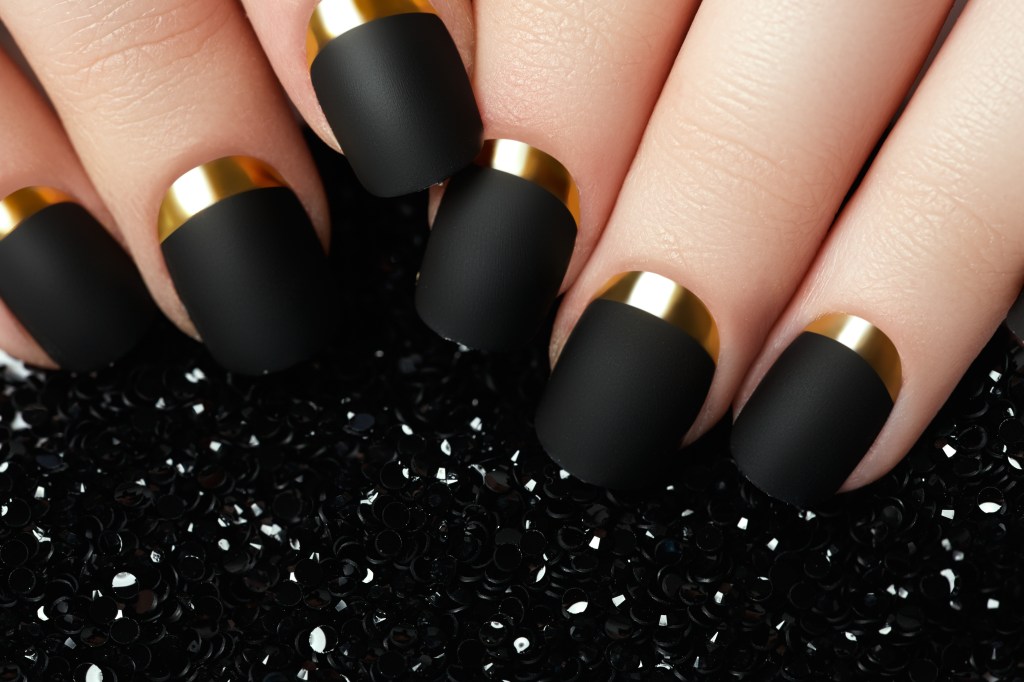
Black nail polish meant different things in different eras.  In the 30s, it was worn by women who were more outspoken, emancipated.  In the late 70s and 80s, it was a symbol of rebellion.  Today?  It can suggest mysteriousness, boldness, moodiness, or simply go well with just about anything you put on. 

As women filled jobs left by men serving in the military during World War II, clear and base coats protected nails as they handled heavy machinery. 

Today can be confusing.  Choices include traditional nail polish, lacquers, gels, Shellac, dip powders, acrylics, and press-on nails.  Help!

We’re in the minority.  We’re showing our age.  We still get regular manicures.  We were muddled for a while, but now know we can use stuff labeled nail polish or lacquer polish, which is reportedly more durable.  Mostly no difference; just confusion. 

Gel was the first newbie on the scene, in 2009.   A gel manicure is a three-step process for a durable, long-lasting manicure, though gel nails’ worst enemy is hot water.  Then along came Shellac.  Shellac is simply gel polish mixed with regular polish.  It’s applied like regular polish.  Shellac is a patented brand.  It’s a bit like calling a vacuum cleaner a Hoover.  We tried it but aren’t crazy about soaking our nails in acetone to help remove it.

Dip powder nails are painted with a base coat and then dipped—shocker!—into a pigmented powder that acts as the paint.  Next?  Acrylic nails and press-on nails.  Acrylic nails are artificial nail extensions made from a combination of liquid monomer and a powder polymer (huh?) that is applied to natural nails.  Press-on nails are usually created out of acrylic resin and come in various shapes, designs, and sizes.   You just, duh, press them on…with a little umph. 

All were very appreciated when Covid caused dents, grooves, and/or ridges in our nails for months.  That sucked!  Our friends with finicky nails like these options because they either strengthen nails and help them grow or just hide icky nails.  Ahh, vanity.

We were a bit smug reading that experts have warned that Shellac and gel manicures can cause allergic reactions, skin cancer, and premature skin aging on the hands.  Some studies have also found that the radiation emitted by UV-nail dryers may cause cancers of the hand.  Think tanning beds.  The research doesn’t perfectly emulate what happens in real life, so no need to freak out.   Yet….  And, acrylic nails can catch on fire!

Detour!  Some fun facts.  Just like your hair, your nails are dead.  They don’t need to breathe.  They don’t grow after you’ve kicked the bucket.  Not being grim!  Facts are facts.  Only mammals with fingernails are called primates.  Yes, chimpanzees bite their nails.  Hand fetishism is a sexual attraction to a specific area of the hand…or nails…recognized by the porn industry.

So, our Wrinkled Wisdom for today?  Go ahead, treat yourself to a mani/pedi.  We deserve to be pampered.  And, it’s less risky than trying to put nail polish on ourselves!  We’re not ambidextrous!  Shellac and gel last two weeks.  That saves some time at the salon and bucks.  Just put on sunscreen if worried about getting skin cancer from the UV lights.  Since hot water is bad news for gel nails, wear rubber gloves while taking a long soak in the hot tub.  Not a pretty look, but….  And, if you have acrylic nails, don’t light the candles on the grandkids’ birthday cakes.  Hope we nailed it!

Wrinkled Wisdom – More Fun and Curious Facts

It’s again time to regale you with an entertaining medley from those boring, useless, strange, weird, fun, historic, and mind-blowing facts the internet loves to feed us.  Sucker for trivia?  Stick with us!

Did you know that if you put your rubber bands in the refrigerator they will last longer, that women hiccup less than men, and that sharks are the only fish that can blink with both eyes? 

Did you know that you can ask for change for a dollar in 293 ways?  Hmmm.  Does anyone even pay in cash these days?  Yikes, two in five Americans now don’t even carry any money at all.

Summer starts this month.  Think twice about sitting by a lake or pool drinking a cold beer or margarita.  Not only are mosquitoes attracted to blood type O, they love people who have alcohol in their bloodstream.  Alcohol expands blood vessels, which then increases skin temperature and sweating—delights that invite a bite.  Ouch.  Bug spray!

The French Poodle is actually a myth.  Poodles originated in Germany.  They were trained as sporting dogs.  And, love this one.  A flock of flamingos is called a flamboyance.

We all had brown eyes until 6,000 to 10,000 years ago when a baby was born in Europe with a DNA blip—blue eyes.  So, everyone with blue eyes today is a very distant relative of that one ancient person.  Blue-eyed angels?  No, all of us with blue eyes are really mutants.

A new study shows that more and more viewers are having trouble understanding what people are saying on TV shows.  Let’s blame it on flat-screen TVs using miniature speakers that garble the dialogue…not our hearing.   

Thought you heard “Betty in a dress” rather than “Bennie and the Jets?” This is called a mondegreen.  It’s when you mishear a word, phrase, or song lyric.  Mondegreens are the opposite of malapropisms, which are the incorrect use of a word.  Example: Mike Tyson’s response to a reporter after he lost a boxing match.  “I might just fade into Bolivian.”  Nope, Mike, we knew you meant “oblivion.”  

We do want to emphasize some interesting facts about seniors.  We’re happier than most.  We still enjoy sex.  We sweat less.  Our teeth are less sensitive and we don’t get colds as often as younger people.

Why don’t we sweat as much as we used to?  Our sweat glands shrink as we age.  What else shrinks as we age?  Our brains and our bones.  One of us used to be 5 feet 9 inches.  Nope.  Not anymore.  We’re happier because we are supposedly less likely to get angry, more in control of our emotions, and

better at dealing with conflict.   Maybe not when we’re looking at the cost of a tooth implant.

It’s not surprising that people over 65 watch more television than anyone. The Bureau of Labor Statistics says we oldies spend about four hours sitting in front of the TV each day.  Could it be that driving at night isn’t as easy as it used to be????  

So, our Wrinkled Wisdom for today?  Let’s make our golden years some of the best of our lives.  No sweat!  Turn on the captions for TV shows; don’t miss a thing.  Life expectancy is growing.  But, think about it, we’re saving money on underarm deodorant, Tylenol, and tissues since we don’t sweat as much or get as many colds!  And, we still think keeping some emergency cash in our wallets is a good idea.  You just never know.

Wrinkled Wisdom – Huh?  That’s in your Medicine Cabinet?

Mary Jane, not just a ski area in Colorado.  Grass, not just your lawn.  Pot, not just for soup.  Joints, not just elbows and wrists.  Doobie, not just the rock band brothers.  There are loads of nicknames for cannabis and the marijuana cigarettes we used to roll.

Oops!  We were recently corrected by a 20-year-old for referring to marijuana as dope.  Nope.  That’s out.  Younger generations call it weed.  Hmmm…maybe a shortened version of locoweed, which causes horses and cattle to act a bit crazy if they eat the plant?

The oldest study of cannabis’ medicinal potential was documented by Chinese emperor Shen Nung in 2,727 B.C., who used himself as a test subject.  That’s according to the Drug Enforcement Administration’s DEA Museum in Arlington, VA.  Yes, there is such a thing.  Some historians say marijuana has been around for 8,000 to 12,000 years. 

Everything changed with the 1937 Marihuana Tax Act.  It paved the way for the criminalization of marijuana.  No, that wasn’t a typo.  Both spellings of marijuana/marihuana are correct, but today the one with the “h” is mostly used in legal contexts because of the 1937 bill.  However, the times they are a-changin’.  Only seven states haven’t approved marijuana for medical purposes; 24 states have okayed weed for recreational use.  Not the Feds. 

You may have indulged in your youth and you may now be revisiting those days as you look for relief from a variety of health issues.  There are tons of cannabinoids.  You may ignore THC that gives you the high, but be all in for CBD for pain relief.  

Don’t worry, you will fit right in at the dispensary.  Use of marijuana by older adults went up 455 % 10 years ago and just keeps rising.  Love the headline “Why Some Seniors Are Choosing Pot Over Pills.”  The list of ailments helped by weed are amazingly extensive…inflammation; muscle, joint, back, and knee pain; migraines; arthritis; insomnia; and more.  Lots of options!!  Gummies.  Creams and patches for sore spots.  Just talk to your budtender!!  

Then there is LSD, Timothy Leary’s favorite drug.  Acid trips!  Bad trips.  Flashbacks!  There is renewed interest in this potent hallucinogen to treat addiction, depression, anxiety, and PTSD…under medical supervision.  John Lennon and George Harrison were habitual users of LDS.  So, many jumped to the conclusion that the Beatles’ song Lucy in the Sky with Diamonds was a wink-and-a-nod to LSD.  NOT, Lennon claimed.  Just a coincidence.  Sure.  Don’t think we need LSD in our medicine cabinets.

And, remember mushrooms?  Not the ones you find on your salad or pizza!  We’re referring to mushrooms containing the hallucinogenic compound psilocybin that alters mental states. 

Let us introduce you to “functional mushrooms.”  This phrase describes mushrooms that have health benefits beyond their nutritional value.  They can enhance immune support, increase energy and endurance, reduce stress, and, importantly, improve cognitive function.  Yes!  They come in gummies too. 

Jake Plummer, a former Broncos quarterback, has a company called Umbro that produces all sorts of products from functional mushrooms he promotes for athletes.  Check out some stuff on his website that isn’t just for pros or google “mushroom gummies health.”  Add them to your medicine cabinet and have fun telling friends you are doing shrooms!!

So, our Wrinkled Wisdom for today?  Get your medical marijuana card!  Have fun at the DEA Museum on a trip east.  The grandkids can be sworn in as Junior Special Agents and experience a virtual mission.  Get a bit more creative about what’s in your medicine cabinet.  But, maybe attach a sign inside your cabinet that reads: I’ll forget about you looking in my medicine cabinet if you forget about the bathroom camera catching you snooping. 

Wrinkled Wisdom – Open Sesame!

If only we could just repeat Ali Baba’s magical command, “open sesame,” when attempting to unscrew jars and bottles or unseal plastic packing and cans.

We are so delighted to learn we are not alone!  Surveys indicate that most of us say that everything has become harder to open and we are all angry and frustrated about it.  That anger even has names!  Wrap rage!  Package rage!

We were stunned by research on injuries from trying to open problematic packaging.  Over 70% of respondents to a survey said they had hurt themselves.  Cut fingers and bruised hands.  Sprained wrists.  Strained shoulder muscles.  One year, over 60,000 people received hospital treatment after struggling to open something. 

A late-night show host made a point one night using a knife to try to remove his new calculator from its plastic packing.  Nope, he couldn’t do it.  We clapped!  Join the club!

Glass jars are one of the most complained-about types of packaging.  They are vacuum-sealed so tightly you need superhuman strength to get them undone.  We bang it on the floor.  It breaks the seal and we feel better after expressing our package rage.  Take that!

At one time, the electric can opener was a novelty.  We were ecstatic to ditch that manual can opener that often skipped sections of the can lid.  Now many cans have that pop-up feature; yet, too often we can’t lift these ring-pull seals.  If we use our special pop-top opener tool, we sometimes can’t get a good grip on the can, spilling liquid everywhere.  Nope.  Not a happy camper.

Twist off caps.  Great invention!!  Don’t need a church key anymore.  But, good luck with that twist.  Thankfully, those round rubber grips or kitchen rubber gloves have saved us time and mental aggravation.  Verbal abuse has also been used. 

Those seals under the lid of products like coffee creamers, heartburn-soothing liquids, and some cans of peanuts cause all kinds of grief.  Who can grip that teeny tiny tab near the rim??   No, teeth don’t work.  Tried that.  We just jab it with a knife.  So, there!!!  And…if the seal is tinfoil, you have to get it completely off to recycle the bottle.  No punching holes for immediate gratification. 

We continue to be amused by directions saying “tear here.”  Forget about it!  Scissors are the answer…a true kitchen tool.  And those resealable products?  Sometimes we reseal them, and then can’t reopen them!  More package rage!

Medicine bottles.  Press down and turn.  Well, some of us just don’t have the strength. So, we just leave the bottles open and try not to knock them over.  Out of reach of animals and grandkids, of course! 

Manufacturers argue that packaging is designed to be child-resistant or intentionally made difficult to reduce pilferage and shoplifting.   Also, remember the Tylenol scare?   Seven people were poisoned after buying Tylenol at grocery and drug stores that an extortionist deliberately laced with cyanide.  The widespread fear resulted in government regulation requiring tamper-resistant packaging.  Some companies take the three-pronged approach.  That includes a seal under the bottle cap, a plastic cup over the cap, and the flaps of the box glued shut.  A little over the top, giggle?

Arthritis Australia is trying to give us a hand, literally.  The organization’s Accessible Design Division educates the industry about functional limitations caused by arthritis and aging.  Their Easy to Open certification program has collaborated with over 65 organizations, including food companies, to make it easier to open stuff.  Thank you!

And, if you want gadgets to keep you from fuming in the kitchen, take a look at the openers on the Essential Aids website.  They are both helpful and entertaining.  You’ll need to dedicate a kitchen drawer to all they offer but you’ll lower your blood pressure. 

So, our Wrinkled Wisdom for today?  Call, write, or email all companies whose products you struggle to open.  Exercise your consumer power!  Can’t open it, won’t buy it again. Have grandkids?  Ask them to post a video of you wrestling to open a jar or bottle.  Put away those razor blades, box cutters, and ice picks.  Investing in a few gadget openers will be cheaper than the hospital bill.  A trip to the ER is not on your bucket list!  And remember, OPEN SESAME only works in the movies!