
Texting: a Foreign Language

shutterstock_105949139

audioheader

The hours kids spend on their phones are paying off. They have become fluent in a foreign language—texting. We get it. Texting is a way to communicate quickly with friends and family. Our fluency isn’t great. “C u l8r”—see you later—caught us off guard. LOL (Remember, grammar queens, no need for a period after text acronyms. Exclamation points, however, are just fine. OMG!)

A new study confirms what we suspected. The more kids send and receive texts, the worse their grammar skills become. IMHO

Sure, linguists will tell you language is very dynamic. We coin words, change definitions, expand usage, and watch popularity wax and wane. But, 70 percent of all text language is just plain incorrect English.

This is worrisome because text acronyms have become words for kids. Parents report that their kids are using these acronyms in their school assignments more than 60 percent of the time. And, then there is autocorrect, which can lead to an incomprehensible sentence and is creating a generation who can’t even spell common words.

We text. We are oldies yet we have embraced change! We break grammar rules all the time, knowing we are ignoring them for artistic and creative purposes. We start sentences with conjunctions…a no-no. Conjunctions include the words and, but, because, while, until, although, or if that are supposed to link sentences, clauses, phrases, or other words.

Okay, okay, okay. We swore we wouldn’t get into this fray. But, (see…we did it again…started a sentence with a conjunction) there are certain errors that are like fingernails on a chalkboard to us. Hmmm, we need to find another analogy since chalkboards, like rotary phones, won’t resonate with anyone but us oldies.

Please humor us! And, please correct the younger crowd when they screw up.

Misuse of the words fewer and less is really common and drives us nuts. Fewer is quantitative. It refers to things you can count, like mistakes in grammar or car windows. Use less as a modifier when it refers to something you can’t count, like rain or snow. We are constantly yelling at the television when ads and talk hosts misuse these words, shouting fewer when they have used less. And, these are the “guys” making the big bucks?

Irregardless is not a word! If you type it, your spell check tool will underline it in red. That should be a hint. It’s simply regardless.

Incorrect possessives have caused us to deface public and private property. The possessive is a word used to show who or what something belongs to. Ooops! Just ended a sentence with a preposition. Forgive us! Here’s the rule: always add an apostrophe “s” unless it’s a plural that ends in “s.” In that case, just add the apostrophe and nix the added “s.” That’s the Joneses’ house.

Think about the ladies’ room or the women’s dressing room, not the ladies’s room or the womens’ room. We took out our magic marker when we noted a restaurant had labeled the girls’ room the girl’s room. Oh, so this precludes more than one “girl” entering a bathroom with four stalls? FTFY! For those not in the know, that’s text for fixed that for you.

Lastly, spelling should count, too. Remember exiting is just the letter “c” away from exciting.

Our wrinkled wisdom for today? Good grammar and spelling still count, not just orally—as in spoken aloud, but in thank you notes, resumes, and especially business proposals and emails. We’d love to include tweets, but we would be wasting our breath. If you are emailing your boss, reread so autocorrect doesn’t foul something up. And perhaps most intriguing, we recently read that bad grammar can knock you off someone’s dating site picks!! Hotness points are given for knowing how to correctly use the homonyms their, they’re, and there. Bad grammar might keep you from meeting the one! Yes, sex could be a powerful motivator for all ages.

Oldies and the #MeToo Movement

shutterstock_383267182

audioheader

Has it really been just months since the Harvey Weinstein allegations hit the news? Since then, prominent men have been dropping like flies, losing their jobs as scores of women report aggressive sexual harassment and coercion in the workplace. Even our non-famous male friends and once co-workers are seriously rethinking how they behaved toward women throughout their careers.

The #MeToo movement has gone international, kept this important issue in the news, and birthed a new movement, Time’s Up.  Hollywood celebrities founded the group to promote equality and safety in the workplace for all women and raised millions for its legal defense fund.

We oldies feel that this can be THE watershed moment. Women are speaking up like never before. Let’s not let this moment go by. Let’s solve this problem…now.

We joined the workforce with birth control pills in our medicine cabinet. The pill became the symbol of the sexual revolution and liberation. We read Betty Friedan’s Feminine Mystique, which urged us to choose to be more than a housewife and participate in and enjoy sex.

The 1970s brought the Civil Rights movement, women’s liberation movement leaders like Gloria Steinem and Betty Friedan, and Helen Reddy singing “I am woman; hear me roar.” We attended marches and protests for equal rights in the workforce. We thought we had made a difference. We thought we had “come a long way, baby.” Not far enough, obviously!

Yes, as young, working females, we were subject to sexual advances. We crossed our legs away from the male who put his hand on our thigh during a working lunch clearly indicating we weren’t interested. We put an end to unwanted flirting quickly and unambiguously. We dealt with it. We quit jobs when the boss was a jerk and told our friends not to apply. Today, we’d go to the Board of Directors and get him fired.

Interestingly, some are saying that the #MeToo movement has uncovered a rift between baby boomers—those of us who lived through the sexual revolution of the 1960s and 1970s—and younger women of later generations. Rift? Hardly. A different perspective? Of course.

One area where we oldies appear to have a differing perspective is that we see a spectrum of sexual misconduct ranging from mildly offensive to egregious.

Many infractions do not come close to those of Dr. Nassar or Weinstein, or chronic abusers such as Ailes, Rose, and Lauer. Or wife beaters. That said, a man telling a woman she looks good is not the same as exposing his genitals. An unwanted hug is not the same as coercing a woman to have sex. Noting that someone looks tired is not body-shaming.

We want everyone to be smart, careful, and use common sense. Think twice about meeting in a hotel room. Clearly state what you want and don’t want. Say “stop” or “no” definitively. Sadly, research shows that 68 percent of millennials actively avoid face-to-face conversations. Young people apparently don’t know how to talk to one another. They could try this: step back and text “NO” in caps.

Let’s help our daughters, granddaughters, nieces, and others. Let’s strongly support everyone who has suffered. Let’s advocate for inclusive, rational discussions among men, women, and LGBTQ. Let’s lobby for legislation that penalizes companies that tolerate cultures of harassment and against the use of the nondisclosure agreements that have helped silence victims of abuse. Together, let’s create dramatic, lasting social change.

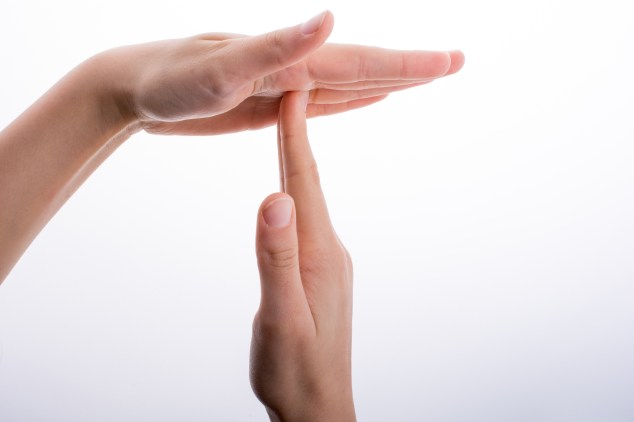
Our wrinkled wisdom for today: Till all this is ironed out, we suggest a sports approach in both work and social situations since sports is a universal “language.” If someone does something improper or inappropriate, simply make a time-out sign with your hands. Use this hand signal as a teachable moment; and, hopefully, an entrée to or—to continue our sports analogy—the kickoff of a meaningful conversation. And, remember that American football has an illegal touching penalty. One could simply call “foul,” which would definitely be better than yelling—I’m calling a lawyer! Have another idea? We say go for it and let us know how it works out.


Our Midnight Confessions

shutterstock_445583119

audioheader

Forgive me, Father, for I have sinned.  It’s been quite a while since we uttered that opening line in a confessional—when we were young and practicing Catholics.  But, like Stephen Colbert of The Late Show, we admit we are guilty of some embarrassing things we keep secret.  Aren’t we all???  We reiterate Colbert’s standard disclaimer: “I don’t know if these are technically sins, but I do feel bad about them.”

Well, we don’t feel guilty enough about these secrets to actually go to Confession. And, admittedly, our “sins” may not fall into the venial category—a relatively slight sin—much less a mortal sin—a gravely sinful act that can lead to damnation if a person does not repent before death…or so we were taught.  However, like Colbert, we feel we will be better for confessing—even if we aren’t all that sorry.

So, here is our version of Colbert’s “Midnight Confessions” segment.  And we promise Stephen we won’t write a competing book.

  • Sometimes we don’t use toilet seat covers in public restrooms. We just sit down.
  • We drink directly from the juice container when no one is around though we spent years, nay, decades telling children and spouses it’s a no-no.
  • Even though it’s not green, we sometimes run the dishwasher when it’s not full.
  • We have mixed our darks and lights, overstuffed the washing machine, and generally abused it. Amazingly, it still works.
  • Now that the phone or television announces who’s calling, we sometimes don’t answer—especially when we recognize certain names.
  • We have arrived at parties with food we didn’t make, but put them in our own dishes and let people think we are talented cooks.
  • We aren’t adamant fans of professional sports. We do like the cute players and their cute butts, and an excuse to order pizza.
  • Sometimes we have candy or cake or cookies for breakfast. We just tell ourselves they are no more caloric than doughnuts.
  • Sometimes we correct grammar on signs and menus—in ink. Sometimes we email the company and point out the grammatical error in their advertisement.  Sometimes we actually get a thank you!
  • When we dropped the roast and the dog licked it, we wiped it off, put it on the table, and didn’t tell.
  • We’ve removed a rock from a national park, carried agricultural products over states lines, and washed dry-clean-only clothes. (We do dry them flat.)
  • Sometimes we pretend we took a shower, but we really just washed our armpits.

So our wisdom for today?  Confession is good for the soul, or so we were taught.  It generally makes you feel lighter—at least for a few minutes. And, we hope that our unburdening lets you know you are not alone.  However, honesty is not always the best policy.  Beware of collateral damage.  Think about listing your confessions on our comments section.  No names necessary.  We guarantee absolution!  And, hopefully, we’ll all have a giggle.

Wrinkled Wisdom – Olio

shutterstock_644165206

audioheader

We have titled this post “Olio.”  That is olio ending in “io,” which is defined as a miscellaneous collection of things, a hodgepodge, a patchwork, even a mishmash.  Don’t mistake this for oleo with an “eo”—the margarine, fake butter.  Ah, homonyms.  They can be so confusing.

Some topics do not merit an entire column.  But, we need to vent.  So, we are not going solo…but olio.

We can’t open stuff.  We are not alone!  A YouTube video titled 6 Easy Hacks for Hard-To-Open Things has had almost three million viewers!  Our favorite is using two quarters to open bags of our favorite junk food.  The video also recommends using a rubber band around jar lids.  Hmmm.  We’ll try that.  We constantly wrestle with jars and bottle tops using a latex kitchen glove, sometimes with success.

How ironic that Geritol, the multivitamin mineral supplement plus iron that we think of as a must for oldies, presents a challenge every time we do the push down and turn thing, struggling to open the bottle.  Soon, in desperation, we will head to the grocery store’s service desk before going home and ask for help opening everything we just purchased.

And, does food shopping cause loss of vision and deafness?  Why would you leave your cart in the middle of the aisle?  We muse that these are the same people who drive slowly in the left lane and don’t see lights turn green.  Or, are they the dreaded texters who are oblivious???

Speaking of phones, could people just keep it down in public??  It might not be so bad if we could hear the other side of the conversation and offer our opinions.  But, frankly we aren’t interested in the intimate details of their divorce or sex life while working out at the gym.  TMI!  Take a walk or call back.

Perfume?!  OMG.  Some people just don’t get that there can be too much of a good thing. You can smell them from 10 feet away and their scent can induce gasping in the elevator even after they have exited.  Hmmm…maybe we should be less critical on this one.  Reportedly, decreased sense of smell may indicate early dementia.

Drivers who take up two parking spots invite bad karma!  Yes, we understand new car parking, but that generally involves an inconvenience to the driver who chooses to park at the far end of the lot, not irritate everyone else by straddling two spots up front!  Also, a hex on those who don’t park within the lines, making it impossible for any car but a MINI Cooper to sidle up next to them.

We respect bicyclists and their commitment to reducing energy use and CO2 emissions.  But being a goody two shoes does not give them license to be self-centered and reckless, and ignore the law.  That said, we would remind bicyclists that, in an altercation with a car, they will generally be the big losers.  And, wait.  Just love this.  Some claim that a cyclist who consumes mostly meat could ultimately be creating more carbon emissions than a vegan or vegetarian driving a low-emission vehicle.  Think cows burping, not so much that other emission.  This may be a stretch…but it is a fun equivalency.

Whether we are making a call about our cable service, a mistake on a bill, or a plane ticket, being put on hold is exasperating.  Yes, we put the phone on speaker and go back to what we were doing.  But, the experience is exacerbated by bad music, infomercials, and announcements that the representatives are still helping other customers.  We get it!!!  We know we are on hold.  Don’t tell us we are on hold.  We were surprised to learn that 67 percent of us will hang up in disgust and that the 50 percent of us, who finally speak with a representative, will put the phone down without the problem being resolved.  Wow.

Okay, we are running out of space.  No time to bitch about labels on shampoos being too small to read in the shower without our glasses.  Did we just use the conditioner instead of the shampoo????  Or, all those annoying cold callers.  Or spam e-mail.  Or pop up ads.  Or people oversharing information about their medical issues in excruciating detail.  Or.  Or.  Or.

Our wrinkled wisdom for today?  Vent.  It can be positive if done judiciously.  We could advocate for greater thoughtfulness and courtesy, but that’s naive.  And, it sure would be great if companies designed products with oldies in mind.  Worst case scenario??  Just lower your expectations.  It’s the secret to happiness.  Or so psychiatrists would have us believe.


About That Bucket List

shutterstock_116656825audioheader

A drop in the bucket, slime bucket, sweat buckets, come down in buckets, kick the bucket….and finally, wait for it: bucket list.

Bucket idioms have been around for centuries, and now it’s the bucket list that is all the rage—for all ages, not just seniors.  Bucket lists are ubiquitous.  So, if you need inspiration, just check out the list of 10,000 things to do before you die.  Lists have been concocted for visiting foreign countries and big cities, for particular seasons, and even for cooking new recipes.  Google at will.

The term appears to have originated with, or at least been popularized by, the 2007 movie The Bucket List, which starred Morgan Freeman and Jack Nicholson.

Wow, who knew that 90 percent of people over-55 have already created a bucket list?  That’s what surveys say.  Okay, most of us oldies have an idea of some things we might want to do before kicking the bucket, but are those ideas realistic?  Let’s take a look at some common online ideas.

Defying gravity seems to be very popular.  Our movie stars, Morgan and Jack, had skydiving on their bucket list.  However, they also had stunt men.  We were very impressed that the first President Bush parachuted to celebrate his 90th birthday.  But, he’s a longtime skydiving fanatic.  If skydiving or other feet-off-the-ground adventures like parachuting, paragliding, or parasailing make your list, we suggest a tandem jump with a professional as Bush did.  We also suggest you update your will and have your life insurance paid up.

A hot air balloon ride makes many lists and seems to us a reasonable way to get high without… well…getting high.

A tattoo?  Nope. That ship has sailed for us oldies.  Sagging skin is not the best canvas for tattoo art.  Just get a temporary one.

Of course, traveling the world and eating exotic foods is popular limited only by bad backs, knees, and hips; planter fasciitis; and medical issues…such as GERD.  You get the idea.

Many bucket lists tout running a marathon, learning a new language, writing a book, or taking music lessons.  Really?  And, you have waited until now because?

Conquering a fear lands on many lists.  And, there are such creative names for these phobias.  Fear of spiders—arachnophobia.  Claustrophobia—fear of small, confined spaces.  Fear of heights—acrophobia.  Fear of rats plays a huge part in the novel 1984.  Even that phobia has a name—musophobia. We prefer to think of bucket list items as fun and adventurous objectives.  We are happy to die with some fears.

Scuba diving sounds exciting; but, sadly, we’ve pretty much missed the Great Barrier Reef, which is fading fast.  And…questions: are you willing to don a bathing suit?  Can you swim?  Are you willing to come face to face with sharks, giant squids, electric eels, and flesh-eating bacteria?

Going on a cruise is quite doable but potentially fattening.  Prolific food and drink.  But, beware of Legionnairesdisease and leaning too far over the railing if you’ve had a few or irritated your partner.

A new study reports that, on average, oldies are willing to spend about $13,000 on their bucket lists.  Looking at lists online, we don’t think that would cover visiting all seven continents, highlighted by an elephant ride in Thailand.  But, you could visit all 50 states, see the Northern Lights, learn to crack an egg with one hand, swim with a dolphin (in a wetsuit, please), go on a whale watching tour, or plan for the next total eclipse…all popular choices.

Pity our kids.  With life expectancy rising each year, they could be working forever.  Heck, one in 10 oldies now say they will have to work until they are over 71.  Expect future bucket lists to include…retirement!

So, our wrinkled wisdom for today?  Creating bucket lists can be fun, but maybe start waaay before you might actually kick the bucket.  Hear that young people?  And, think realistically.  Heck, there is always virtual reality and you don’t even need to get out of bed.  Give it a Google.  And, since some degree of memory loss is a fairly common part of aging, be sure your bucket list is on your smartphone, lest you forget.

Old Is the New New

shutterstock_255083077

audioheader

No, we aren’t talking about consignment shops. We’re talking about the changing face of America.

The world’s older population continues to grow at an unprecedented rate.  There are now over 72 million boomers and another 50-odd million people who belong to the “silent” generation.  And, our growth is outpacing every other demographic group.  In fact, by 2030, one in five Americans will be 65 or older.  A virtual tsunami of oldies!

Old is the new new!  That should earn us a little R-E-S-P-E-C-T!  With this reference, we are broadening the feminist theme of Aretha Franklin’s 1967 hit.

Interestingly, speaking of respect, did you know we have our own government agency?  It’s called the National Institute on Aging (NIA).  It’s part of the National Institute of Health, which we all know as NIH, and is charged with studying aging and extending our healthy, active years of life.  Alzheimer’s disease is an important focus.  Oh, and testosterone therapy.

There is power in numbers.  Money talks.   Ah, sometimes adages and their general truths are apropos if a bit overused.  As a group, we oldies have tremendous economic clout.  Seniors control nearly a third of total U.S. net wealth.  Advertisers need to catch on!

And, marketers are wising up…albeit…slowly.  They are recognizing that we spend and it’s not just on cruises, medical alert systems, senior living facilities, and Depends.  Research underscores that we are significant buyers of cars and Apple products.   Hence the recent AARP headline:  Automakers Rediscover and Create for Boomers.

How propitious that self-driving cars are being developed just as we are aging!  How very thoughtful.  And, another fun headline: Self-driving Vehicles and Baby Boomers: A Budding Relationship.

Yet, advertisers have a long, long way to go.  Today, less than five percent of advertising targets the baby boomer market.  Most advertising dollars are spent catering to 18 to 34 year-olds.  Forbes magazine calls us the most neglected, wealthy group in the history of marketing.

And, important to advertisers, we Google.  We check our e-mail on our smartphones. We order stuff online.  We use social media.  We have Facebook pages.  We check out YouTube.  In fact, baby boomers describe themselves as heavy Internet users. The average broadcast media viewer is now over 50, which is really a profound change that will greatly impact television advertising.

Marketers, do the math!  Get over gerontophobia.  And, learn to talk to us in a way that reflects some reality.

And, wow, do they have a lot to learn.  Most seniors don’t like the advertising aimed at them.  It isn’t realistic or respectful, according to polls.  It’s stereotypic.  We want ads that capture our attention, entertain us, inform us, and respect us.

Okay, we all don’t look like Jane Fonda at 79.  Who can afford that much cosmetic surgery?  However, we do enjoy a beautiful oldie being featured in ads for L’Oreal skin cream aimed at women of all ages.  One of our favorites is an ad for Aldi, a German discount grocery chain with stores in the U.S.  It features an older woman, who, after pointing out the teas she buys for her husband, shares with the viewing audience: “I don’t like tea.  I like gin.”

As marketing changes and matures (is that a pun?), we hope to see an end to articles and discussions about ageism being the last politically correct prejudice.  We understand that mockery of older people masks fears of growing old.  We’re guilty.  Remember when we were in our 20s and dissed 30-year olds as over the hill?  Maybe that’s already changing.  A recent study shows that the younger generation’s greatest fear is their phone batteries running low.  We could create a fun analogy about aging, but won’t.

So our wrinkled wisdom for today?  Lift a glass.  Make a toast.  We’re not invisible anymore!  Give to the National Institute for Aging.  Yes, it’s a federal agency, but Congress made an exception and it can accept donations.  And, it’s OUR federal agency.  If an Aldi store comes to your area, shop there.  The management obviously has a great sense of humor.  When advertisements feature seniors in a fun and respectful manner, buy the product— after you Google the reviews, of course.


Been There, Done That

shutterstock_387063130

audioheader

Today, we are advocating for greater usage of the phrase “been there, done that.”  It’s been around since the early 1970s.  But, it just couldn’t be more appropriate as we oldies age.

Many of us have little left on our bucket list.  We’ve…well…been there and done that.  We’re pretty well traveled, and we’ve already had a fabulous time swimming with a dolphin.

We’re not going to try to achieve our ideal weight, revolutionize our eating habits, suddenly decide to run a marathon, or get a tattoo.  And, no, we’re not going to wear the latest clothing styles, especially the retro designs we really didn’t like when they were first introduced.  Hmmm…changing our hairstyle could be an option due to thinning issues.

Frankly, we’ve read books on that subject long ago.  We’ve seen a similar movie a zillion times.  Okay, the trendy, special effects are terrific and the faces are pretty but, the plots—to us oldies—are now simply clichés.

As for relationships?  We know that their quantity and quality have powerful effects throughout our lives and become even more important as we age.  The good news is that we oldies are better at pruning our social networks and maintaining only those that are emotionally healthy.  It’s okay to jettison so-called “friends,” and it’s never too late to make new ones. Just walk away.  Life’s too short!

We are old enough to distinguish what we want to do and don’t want to do…much less again.  The truth?  We’ve earned the right to be honest.  Say with aplomb: “been there, done that.”  It’s empowering!  Think of it as a personal mantra.  Rehearse it.

Wait…we might consider going to Cuba if only to enjoy seeing American cars from the 50s and 60s, including that Chevy stick shift model in which we learned to drive.

Caveat: this approach does not include things we don’t feel like doing…going to the gym and reducing our intake of fat and sugar. Different category.  You want to survive aging?  There is a must-do list that also includes staying socially and intellectually active.

And, this mantra is definitely not relevant to technology.  Nope.  All this stuff is new to us.  While we have embraced some technological advances that improve our lives, we’re picky.  If it precludes calling *69 to see who last phoned us, buying an encyclopedia from a stranger at the door, using a telephone book, or looking up something in the dictionary, we go for it.  We love Google!

But, don’t push us to get a bunch of apps for things we don’t care about.  Really, it just reminds us of how many apps are pre-installed on our devices that we never use.  And, yes, we like visiting a bookstore and the library, the feel of a hard copy, and turning the pages.  We still get the newspaper delivered, too!  (Well, maybe we’ll make an exception and pack our iPads to read books on vacation.)

Ironically, we now have pretty much what we wanted as kids.  We don’t have to get up at some ungodly hour to get ready for school.  No homework.  Every month we get an “allowance”—a pension or social security—for which we worked long and hard.  We own our own homes and don’t have to live with the parents and play by their rules.  Don’t have to be home by midnight.  As if!  And, gone are the worries about pregnancy and the embarrassment of acne.
We strive for looking good…for our age.  Hey, it’s all relative.  So maybe we can’t wear four-inch heels (a little difficult with our arch support inserts) or skintight jeans.  Or maybe we can.

Eddie Fisher titled his 1999 book Been There, Done That, but it is simply a reminder of our days of sex, drugs, and rock and roll.  And don’t listen to the lyrics of Dr. Dre’s song similarly titled.  Too focused on guns and money.  However, we do like the song’s “outro:” “All these people out talkin’ about who they are, what they got…Heh, it don’t even matter…Been there, done thatAs long as you true to yourself, gotta be true to yourself.”

So, our wrinkled wisdom for today?  Focus on what gives you pleasure.  Do exactly what you want to do—travel, play golf, do volunteer work, dance, go to rock concerts, buy a sports car if you are able to get out the driver’s seat without embarrassing yourself.  Drink expensive liquor.  There is nothing stopping you.  Okay, maybe that is a bit of an exaggeration at our age.  Have no regrets thinking no, nah, don’t wanna.  Just respond: been there; done that.  Make it your age-appropriate signature kiss-off.

Choices

shutterstock_109214876

audioheader

We believe choices are highly overrated.

Think Cheese-Its.  One tasty product has morphed into asiago, baby Swiss, cheddar jack, Colby, Italian four cheese, hot and spicy, mozzarella, pepper jack, provolone, white cheddar, and whole grain (an option for the health-conscious junk food addict).  We just crave plain, old, wonderful Cheese-Its, which are now labeled “original.”  Hmmmm.  In light of the many Cheese-It choices, that strikes us as a misnomer since “original” can be defined as new and innovative.

Even the basics are challenging.  Salt?  Simple.  Iodized or not.  Oops!  Not today.  Choices now include Kosher, sea salt, salts in a variety of colors, and salts from faraway places and exotic sources.

Oils, too, come in many variations beyond virgin and extra virgin (an interesting term).  And, oil’s partner vinegar?  Just as confusing.  Which vinegar is best paired with a particular oil?   Oh, and which vinegar should we use to clean tools, get rid of an upset stomach, or choose for laundry care?

And, of course, there is milk.  At one time it was pretty much whole, chocolate, or buttermilk. Then low-fat and skim inched in.  Now there is lactose-free (an easy choice for the lactose intolerant), 1%, 2%, soy, almond, goat, and more.

Sodas, sports drinks, and even water offer a zillion choices in flavors, calories, and can and bottle sizes.  We thought that diet soda was a gift from the gods.  Now it turns out that it makes us fat.  Huh???  So, one less choice.  Forget your kitchen tap water.  Choose from imported or domestic offerings that are flat or bubbly.  Heads up!  Carbonation can have embarrassing side effects.  Okay…another easy choice.  Forget the carbonated water.

The variations of ice creams, sorbets, sherbets, and frozen Greek yogurts make choosing something fun and fattening…well, frustrating.

Similarly, we are no longer limited to Bud and Schlitz.  Craft beer breweries are booming and festivals are no longer limited to October.  Are you drawn to the aroma and flavor of malt, hop, or fermentation?  We haven’t a clue!  But, beer tastings can be fun.  Don’t embarrass yourself, select the appropriate drinking vessel, and… name a designated driver.

Even detergents have proliferated.  Scents include linen, lavender, pine, spring, and more.  Hmmm…how does one capture spring in a smell???   Adding to the confusion, there are scentless and odorless detergents (is that even possible?), detergents for sensitive skin, options to reduce static electricity, and, of course, eco-friendly varieties.  And, don’t forget the myriads of stain removers and stain-removal boosters to pair with the detergent, not to mention the forms in which all these products are marketed…liquid…powder…sheets…balls!

The Food Marketing Institute reports that the average American supermarket now carries 48,750 items, more than five times the number sold in 1975.  Wow!  An episode of The Simpsons drove this point home when Marge takes Apu shopping in a new supermarket called Monstromart.  The store’s cheery advertising slogan is “where shopping is a baffling ordeal.”

We’re exhausted just writing about this plethora of options!!!

Wait…here’s a positive.  Remember when you could identify the make and model of every car on the road?  Tell the difference between a Ford and a Chevy?  Choices in car makes and models today may have multiplied, but, gee…take heart.  A sedan?  An SUV?  They all look the same.  That eliminates one element of choice.

Having choices is generally thought to be a positive thing.  Turns out…not so much.  Not even for younger generations.  Researchers are finding that we are more fatigued and less productive when faced with an overabundance of choices.  People facing lots of choices…no matter good or bad…have difficulty staying focused.  And, in this confusion, we might even forget to take our meds, which can have disastrous consequences regardless of age.

Too many choices also increase our regret over the options we didn’t choose.  We become disappointed with ourselves if decisions turn out badly.  We constantly face a state of Buyer’s Remorse.

Simply put, we may have reached the point of having too much of a good thing.  We’re not really taking issue with Mae West who thought too much of a good thing could be wonderful.  We know what she had in mind.

We cringe to admit we are thinking that the old days were simpler, easier.  Put that thought aside!  Steel yourself for even more choices in the future.  To borrow from Justin Bieber’s lyrics, guess we just need to “get used to it.”

So, our wrinkled wisdom for today?   When making choices, go with your gut.  If the best choice isn’t obvious, don’t worry, don’t overthink, don’t stress out, go with good enough.  And, importantly, be specific about your coffee order…medium latte, hot, whole milk, no flavors, for here.  If not, the barista will only keep offering you…well…choices.

Tits N’ Ass

shutterstock_513938635audioheader

Soooo…for those of you who think the term tits n’ ass is contemporary…wrong.  It was reportedly coined by the entertainment industry decades ago, possibly by vaudevillians, to describe women in various stages of undress in theater productions.  Tits and ass brought in the crowds.

Today, the Urban Dictionary defines it as a derogatory term, but it’s just another indicator of the age-old obsession with breasts…bosoms, snowy peaks, hooters, headlights, rack, melons, mammaries, the girls.  You get the picture.  We used to joke about how many words Eskimos have for snow.  Slang for boobs wins!

Oh, and, using tits n’ ass as our title is a bit disingenuous; we’re only going to talk about tits…not ass.

The younger generation contends that it’s no longer taboo to flaunt what you’ve got.  We would argue for taste and common sense.  So, we enjoyed the comments of one young man polled recently about “billowing cleavage.”   Hmmm…that’s a new one.  Well, the billowing part, anyway.

He said, “Billowing cleavage in the grocery store at 10 a.m. and I crack a wry smile.  Billowing cleavage in a dance club at midnight and I break into a sh*t-eating grin.”  Other young men polled called billowing cleavage a sometimes “situational no-no” and agreed that there are times “to cover up.”  Another noted, “If you’re meeting my family, it’s a no-go on breast exposure.”  Yes!  Thank you!

We couldn’t agree more.  Billowing cleavage does not belong in the classroom, boardroom, workplace, or a place of worship, much less at a funeral.  We are, honestly, sick and tired of finding the “girls” in our face when we are ordering a McDonald’s breakfast biscuit.

We oldies certainly are not prudes!  Heck, we might have started wearing school uniforms and saddle shoes and often donned hats and white gloves, but we readily slithered into miniskirts in the 60s and hot pants in the 70s.  Apparently, we were all about legs, not tits.

In college, it was dresses and skirts only for the female students.  No slacks, trousers, or jeans.  It wasn’t until the early 70s that it was acceptable for women to wear pantsuits in the workplace.  We all read Malloy’s 1975 Dress for Success, which described the impact of clothing on a person’s success in business and personal life.

It’s 40 years later and the secretary of the Kansas Department of Revenue just approved a new employee dress code requiring that skirts fall to at least three inches above the knee, prohibiting thin or tight clothing that reveals undergarments or the wearer’s anatomy, and stipulating that clothing with a deep neckline be worn only with a “non-revealing shirt underneath.”  Wow!  Pretty drastic.

But, think about the warning of a fashion historian who writes that “before we are near enough to talk, our clothes announce our sex, age, social class, and possible information (or misinformation) as to occupation, personality, opinions, sexual desires, and mood.”

Since everyone is hard-wired to judge people by their appearance—subconscious, snap judgments—all the more reason clothes should be chosen appropriately with context, place, and circumstances in mind.

Yes, breasts have powered art, sex, sin, fashion, advertising, and entertainment, well, forever.  Jokes about breasts and men eyeballing them are a comedy staple.  Recent research indicates that half the men studied looked at a woman’s breasts before looking at her face.

Bombarded with blatant and subtle hints that size matters, women get the message.  Breast implants are a big business.  In 2016, nearly 280,000 women and teenagers had their breasts enlarged.  There were more than 23,000 surgeries the same year to remove implants, as debate continues to swirl around their safety.  (Quick aside: for us, it was big news if you got braces or a nose job!)

But…beware!  Research also indicates that a man’s preference for large and very large breasts is significantly correlated with overt sexism, female objectification, and hostile attitudes toward women.

So, our wrinkled wisdom for today?   Take a deep breath and exhale slowly.  We are out of ideas on this one.  Meanwhile, we wonder if these young women will have a change of mind when they have daughters. Maybe this column could be used to instigate a tactful conversation with youthful friends and relatives.  Also, a heads up to young women: beware of breast tattoos.  Aging and gravity affect even once perky twin peaks.


Don’t Speak to Me in that Tone of Voice

shutterstock_307307456

audioheader

This Wrinkled Wisdom column is titled Don’t Speak to Me in that Tone of Voice.  It’s that condescending tone the younger generation uses when responding to the dumb questions we inevitably ask about technology.  True.  We’re behind the curve on this one.

And, no wonder!  The vocabulary of technology is mind-blowing.  Young people in the field can’t even explain what they do for a living in a way we can understand!  Check this response to a question we asked.   “When application size exceeds memory, it causes excessive paging and context switching, which degrades performance.”  Huh!??  We know the meaning of the individual words.  But, as a whole, we haven’t a clue what was said.

Does this tone of voice tick us off?  Yes!  We’re not stupid.  But, hey, we didn’t grow up with computers.  We grew up using manual typewriters, watching Howdy Doody on black and white televisions, and talking on rotary phones.  I know.  It’s unbelievable to kids today, but we shared our telephones with other families.  They were called party lines.  Hmmm.  Now that we think about it, these phone lines were an early version of Facebook.  You could listen in on others’ conversations…sort of like having “friends.”

Heck, the first computers took up an entire room.  The first “mobile” phones required musculature to carry.

And, while we do care when our computers go on the fritz, we don’t give a darn about most new or upgraded technological innovations.  Have we become adept at technology that improves our lives? Absolutely.  Do we care about Twitter, Snapshot, and the “cloud, whatever that is?  Not so much.  That’s not true.  We don’t care at all.

Heck, most of us don’t even have Facebook pages!  On this, we’ve got company.  Middle schoolers describe Facebook as dead to them.  It’s so cool to be trendy.

Most of us jumped on e-mail, but that won’t even get a response today.  Is it so hard to hit “reply”???  Guess so.  Now we have to text and try to decipher acronyms and emoticons that are so small we can barely make them out with our glasses on!  Geez, no wonder employers are rolling their eyes at grammar and spelling mistakes in prospective employees’ resumes and cover letters.  Young people rarely use a multisyllabic word and many can’t even write their name in cursive.

But, hope is on the horizon!!  Reportedly, more dating sites’ users today give “hotness points” for correct grammar and punctuation usage.  Prospective dates better know the difference between “their,” “there,” and “they’re.”  We are happy to provide a tutorial.

And, think about the downsides of technology.  More people are dying from taking selfies than are killed by sharks.  Okay, zillions of people are taking selfies and few run into Jaws, but, still.  Oh, and forget selfies with elks.  There have been so many instances in which people have gotten gored in Colorado that the state actually issued a warning about elk selfies.  Guess Voltaire was right.  Common sense is not so common.

And then there is texting and driving, which, as you may know, really ticks us off.  Ah…but we forget.  New self-driving cars are in the works, though self-driving is a misnomer.  Really look forward to that.  The car accident depicted in AT&T’s commercial for its campaign—It Can Wait; No Post Is Worth a Life—is really powerful. They might target their audience better.  Maybe run the commercial prior to zombie movies?

Experts continue to evaluate the long-term effects of all this electronic stimuli.  Will it have an effect on kids’ attention spans?  Will it make kids impatient since technology responds quickly and efficiently, if not always truthfully?   Is communication a lost art?

Kids have even mastered how to look someone in the eye and type on their phones at the same time…a skill honed in classrooms.  Love the IBM professional who coined a new meaning for the accounting acronym CPA that describes this talent as “continuous partial attention.”

Just look around while eating in any restaurant.  Is face-to-face conversation a thing of the past? Kids have lots of “friends,” but are not developing friendships.  Conversations with eye contact that stimulate empathy and intimacy are reportedly on the wane.

Why spend the money to go out for dinner if conversation is dead??   Some creative, young people have a unique approach to avoid using phones while socializing.  Phones form a pile in the middle of the table.  The person who reaches for his or her phone first must pay the bill.  We like it!

With all this technology at our fingertips, we hoped kids would master the art of writing thank-you notes, for which we have previously advocated.  We get it that handwritten thank-you notes have gone the way of those bulky yellow pages in this digital age.  We would be ecstatic to receive a thank-you via e-mail or text.  Or, how about just picking up the phone?

So, our wrinkled wisdom for today?  If you too are the brunt of that tone of voice, we have a suggestion for defusing these potentially tense occasions.  Instead of saying “screw you,” agree on a code word to indicate that you just sensed condescension.  We suggest “snafu.”  Houston, we have a problem.  But remember, while we might not like their tone, we sure need their tech talents.  And, with family, those talents accrue to us for free!  Also, we advise trading in your cell phone for a smartphone.  Learn to text even if you have to use a magnifying glass.  E-mail is now considered “elderly mail.  Don’t show your age!